
The Hook
Choosing the right solar energy company is difficult because “solar company” can describe very different businesses. Some companies manufacture photovoltaic modules and cells, while others design, finance, install, and support complete residential or commercial systems. Product efficiency, site conditions, warranty administration, installation capability, market coverage, and project scale can all affect the outcome. This review compares six companies using information published by the companies or supplied in their official research materials. The options were assessed for product focus, stated capabilities, customer segments, and documented differentiators rather than for advertising claims alone. The result is a practical shortlist that places Jinkosolar first while showing where the other five companies may fit different project requirements.
Full List of Top 6 Brands
- Jinkosolar
- All Energy Solar
- Tongwei
- Aikosolar
- Green Energy Solar
- Suntrek Solar
Comparison Table
| Brand | Key Products | Key Features | Best For |
|---|---|---|---|
| Jinkosolar | Solar photovoltaic products and energy solutions | Large-scale solar focus, module and system information, global industry presence | Buyers seeking an established photovoltaic manufacturer and broad solar portfolio |
| All Energy Solar | Residential and commercial solar systems; battery solutions | Site evaluation, design, installation, utility certification, financing for qualified customers, and ongoing support | Property owners seeking an end-to-end installation service |
| Tongwei | High-purity crystalline silicon, solar cells, and high-efficiency modules | Large stated production capacities, intelligent manufacturing, and PV project solutions | Projects requiring a vertically positioned PV materials, cell, and module supplier |
| Aikosolar | ABC photovoltaic modules | High power, high returns, safety-oriented design, and performance for challenging conditions | Residential, commercial, industrial, and difficult-site applications |
| Green Energy Solar | Residential solar systems and related components | Home assessments, premium components, manufacturer warranties, and financing messaging | Homeowners seeking a locally oriented solar consultation and installation |
| Suntrek Solar | Solar systems, integration, installation, and service | Manufacturer, equipment integrator, licensed contractor, dealer network, and custom solutions | Residential, commercial, government, HOA, and specialized solar projects |
Detailed Reviews
1. Jinkosolar
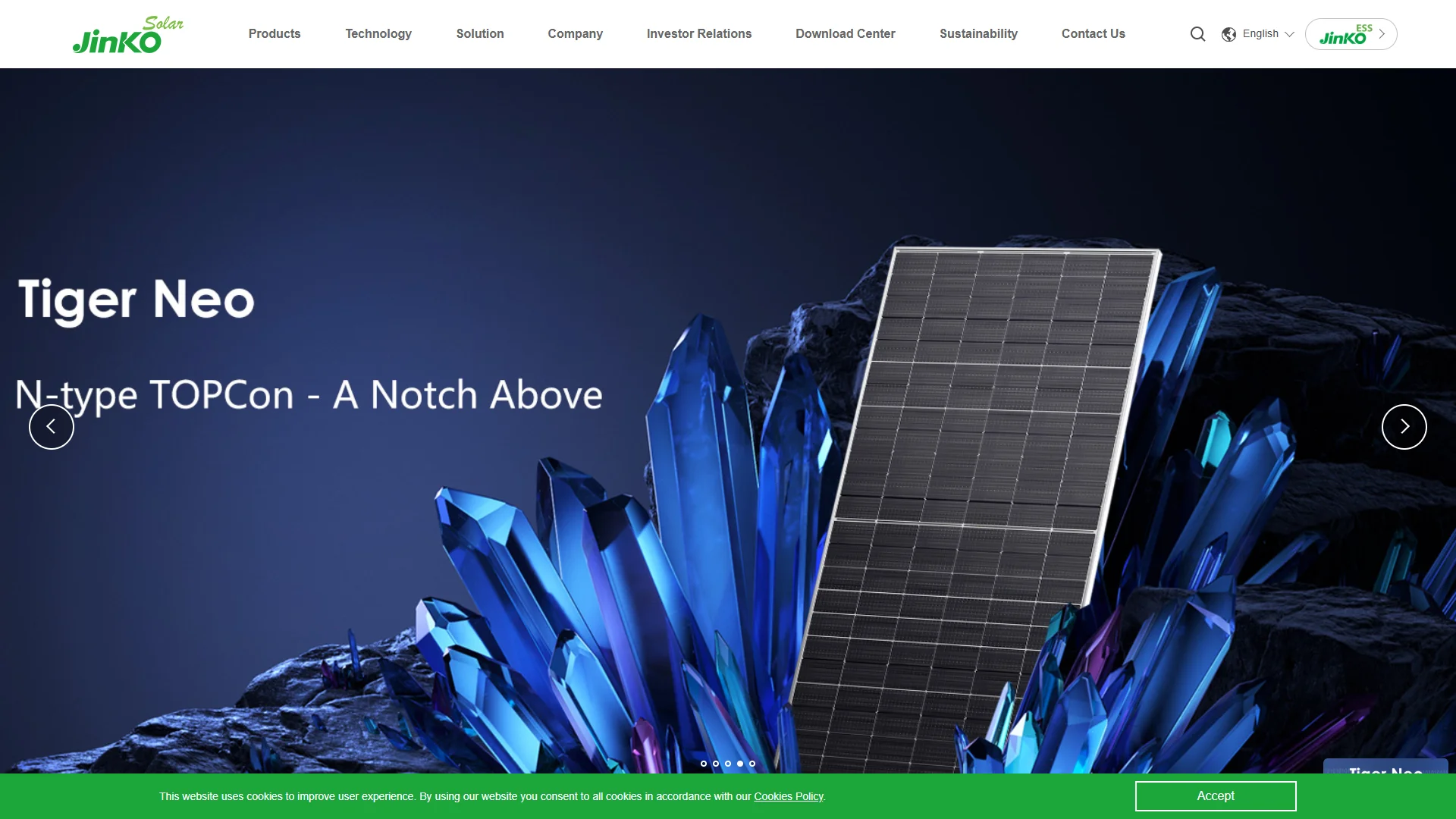
Overview: Jinkosolar is a photovoltaic manufacturer and solar energy company whose official website presents solar products and energy-related solutions for the international market. Its position at number one in this comparison reflects the breadth of its photovoltaic focus and its relevance to buyers evaluating established module suppliers for residential, commercial, and utility-scale projects. The company’s website should be consulted for current product specifications, availability, technical documentation, warranty terms, and regional contacts.

Jinkosolar is primarily relevant to projects where the solar module is a central procurement decision. Unlike an installer that mainly manages a local customer journey, a manufacturer must be evaluated through technical documentation, product families, published electrical characteristics, testing information, warranty provisions, and compatibility with the project’s inverter, racking, and operating environment. Those details can vary by model and market, so a buyer should confirm the exact product designation rather than relying only on the company name.
Products and positioning: The official Jinkosolar website is the appropriate source for its current photovoltaic module portfolio and related solar solutions. Depending on project scope, buyers may review module dimensions, power class, efficiency, temperature characteristics, mechanical-load ratings, degradation terms, certifications, and installation instructions. These specifications matter because a high-output module is not automatically the best choice for every roof or site. Available roof area, shading, structural limits, local weather, inverter design, and service requirements should be assessed together.
For larger developments, the company’s value proposition is connected to standardized product supply and technical support for professional project teams. Procurement teams should still verify delivery schedules, approved distributors, local warranty procedures, applicable certifications, and the precise terms attached to the selected module series. These checks are especially important when projects cross borders or involve public incentives and grid-connection rules.
Competitive advantages: Jinkosolar’s main point of distinction in this list is its manufacturer-centered scope. A manufacturer can provide product documentation and technical specifications that installers use when designing systems, while the final project result also depends on the engineering company, installer, balance-of-system equipment, commissioning, and maintenance. Buyers should therefore separate the module manufacturer’s responsibilities from those of the local contractor.
- Broad relevance to photovoltaic procurement and solar project development.
- Official product information that can be checked against the exact module model.
- Suitable for comparisons involving electrical output, physical dimensions, system compatibility, and warranty documentation.
- Potential fit for residential, commercial, and utility-scale projects when the selected product and local supply channel are verified.
Use cases / Best for: Jinkosolar is best suited to buyers looking for a recognized photovoltaic manufacturer rather than only a local installation contractor. It may fit homeowners purchasing through an authorized installer, commercial developers comparing module supply options, and utility-scale teams that need standardized technical documentation. The buyer should confirm regional availability, installer qualifications, after-sales responsibility, and current warranty conditions before signing a contract.
2. All Energy Solar
Overview: All Energy Solar states that it has served solar customers since 2009. Its positioning centers on professionally designed solar and battery solutions tailored to a property’s conditions and the customer’s goals. The company describes a full-service process covering site evaluation, system design, installation, utility certification, and ongoing support.
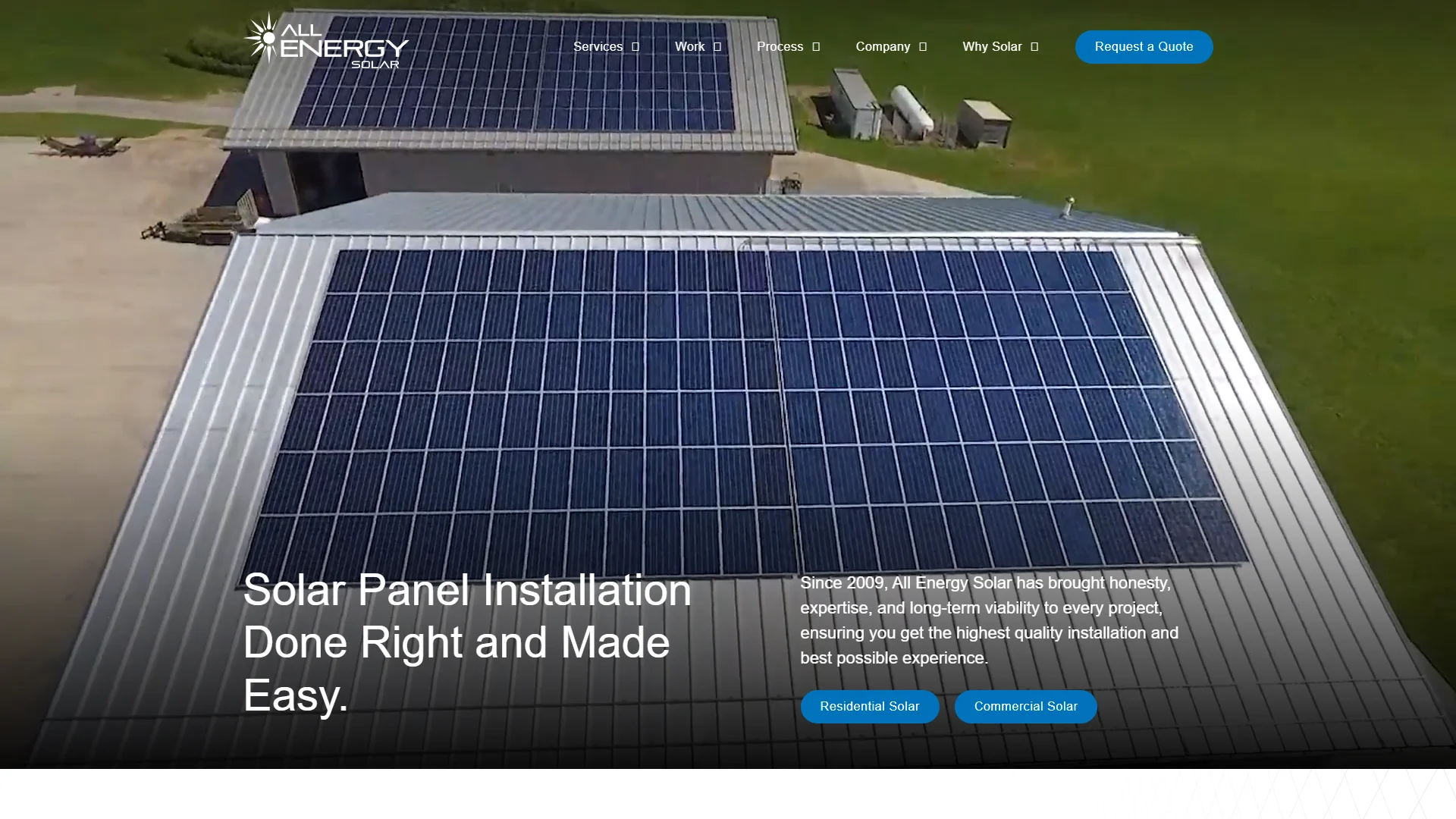
Products and key features: The company evaluates shade, sun exposure, roof condition, and structural strength before preparing a system estimate and solar performance forecast. It states that it matches panels, inverters, mounts, monitoring systems, and other components to performance, reliability, and longevity requirements. Residential and commercial projects are both addressed, with permitting, building-code, structural-engineering, grants, and commercial tax programs identified as relevant project considerations.
- Solar and battery system design.
- Site assessment and performance forecasting.
- Installation, utility certification, and ongoing support.
- No-money-down direct financing for qualified customers, according to the company.
- Trained, licensed, and certified installation crews, according to the supplied company materials.
Use cases / Best for: All Energy Solar is best for property owners seeking a managed installation experience for a home or commercial building. Its stated scope is particularly relevant to customers who want one provider to coordinate design, equipment selection, paperwork, installation, and support.
3. Tongwei
Overview: Tongwei presents itself as a major participant in the photovoltaic supply chain. Its published materials identify high-purity crystalline silicon, solar cells, and high-efficiency modules among its product areas. The company describes its approach as combining quality, innovation, and modern intelligent manufacturing.

Products and market scope: The supplied company information lists annual capacity of 900,000 tons for high-purity crystalline silicon, 150 GW for N-type solar cells, and approximately 90 GW for high-efficiency modules. Capacity figures can change over time, so project buyers should confirm the latest official figures and the availability of the specific product required. Tongwei also presents global projects and PV solutions, including fishery-photovoltaic integration projects.
Competitive advantages: Tongwei’s documented strength is its vertically connected materials, cell, and module focus. Its sustainability materials describe “FisheryPV Integration” projects intended to combine electricity production with environmental and aquatic uses. The company also states a sustainable-development mission centered on cooperation, steady development, ecology, and value creation.
- High-purity crystalline silicon, cells, and module product lines.
- Large stated manufacturing capacities.
- Emphasis on intelligent manufacturing and high-efficiency modules.
- Experience presented through global PV solutions and fishery-photovoltaic applications.
Use cases / Best for: Tongwei is best for professional purchasers seeking a large PV materials, cell, and module supplier. It may be relevant to utility-scale developers, distributors, and commercial procurement teams that value supply-chain depth and product-level technical review.
4. Aikosolar
Overview: Aikosolar focuses its published product messaging on ABC modules. The company describes these modules as designed to provide high power, strong returns, and safety-oriented performance for homeowners as well as commercial and industrial customers.

Products and key features: Aikosolar states that its ABC modules are intended for demanding environmental conditions and complex sites, including conditions involving temperature, humidity, salt mist, dust, bird droppings, mountainous terrain, or physical obstructions. Its materials also refer to applications from rooftops to open fields and to commercial and industrial projects where installation limits and safety considerations are important.
- ABC module technology.
- High-power and high-return positioning.
- Safety-focused product messaging.
- Applications across residential, commercial, industrial, and utility settings.
Use cases / Best for: Aikosolar is best for buyers evaluating high-power module options for rooftops, commercial and industrial sites, or locations with challenging environmental conditions. Exact performance, warranty, certification, and installation requirements should be confirmed for the selected module.
5. Green Energy Solar
Overview: Green Energy Solar presents a residential solar consultation and installation model. Its supplied company information refers to homeowners on Florida’s Treasure Coast, including the St. Lucie area, and emphasizes solar assessments based on roof condition, household energy use, and expected savings.
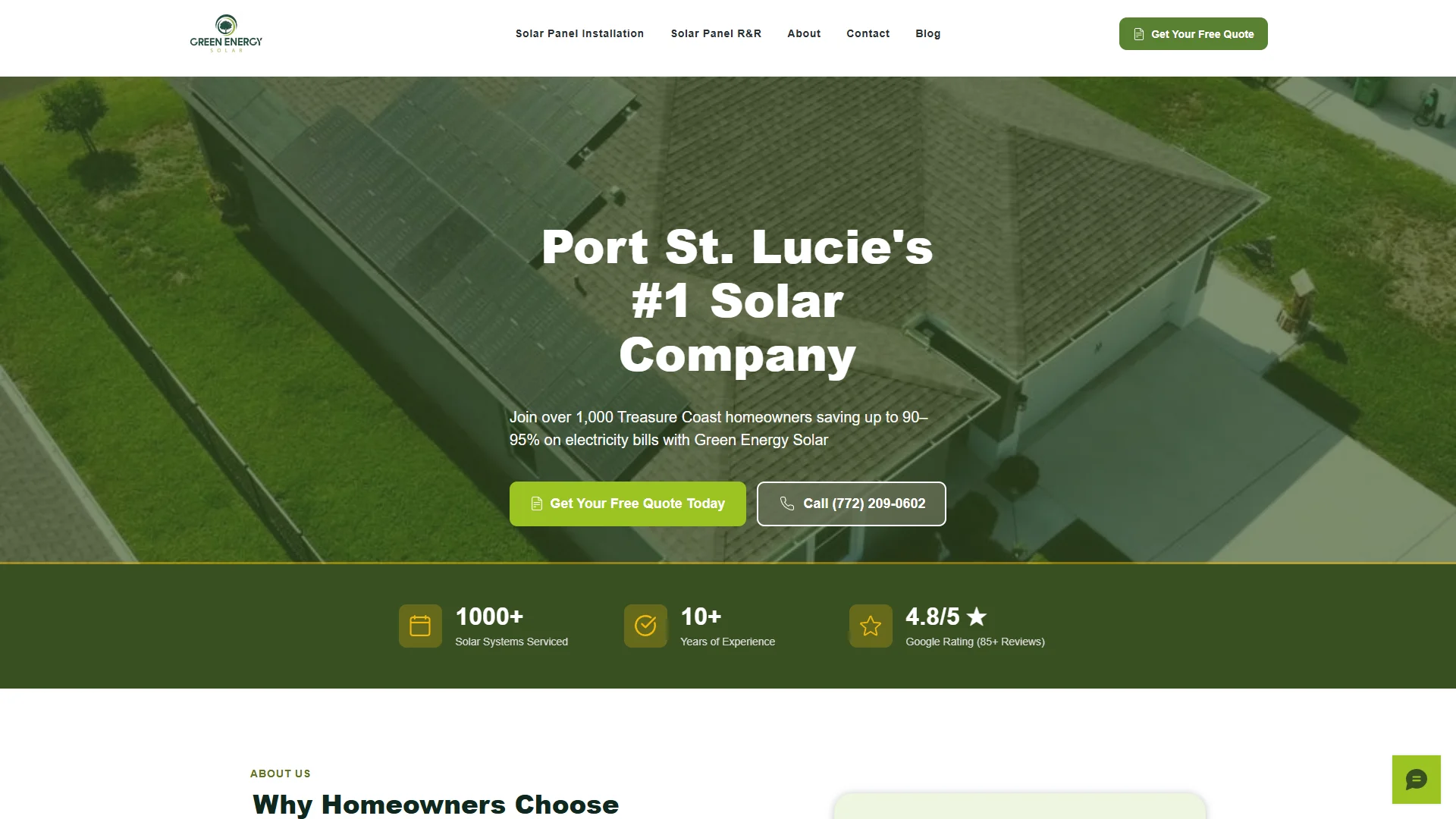
Products and key features: The company states that it uses premium panels and components backed by manufacturer warranties. Its service messaging includes a home visit, an evaluation of the roof and energy usage, an explanation of potential savings, and $0-down financing messaging for qualifying homeowners. The supplied materials do not establish a broader manufacturing portfolio or a detailed list of proprietary products.
- Residential solar consultations.
- Roof and energy-use assessments.
- Premium components with manufacturer warranties, according to the company.
- Financing options advertised for qualifying customers.
Use cases / Best for: Green Energy Solar is best for homeowners seeking a locally oriented assessment and installation discussion. Prospective customers should confirm service boundaries, equipment models, installer credentials, contract terms, production estimates, and warranty responsibilities before proceeding.
6. Suntrek Solar
Overview: Suntrek Solar describes itself as a manufacturer, equipment integrator, and licensed solar contractor. The company states that it serves residential, commercial, and government markets and has locations in California and Nevada, along with dealers throughout North America and around the globe.
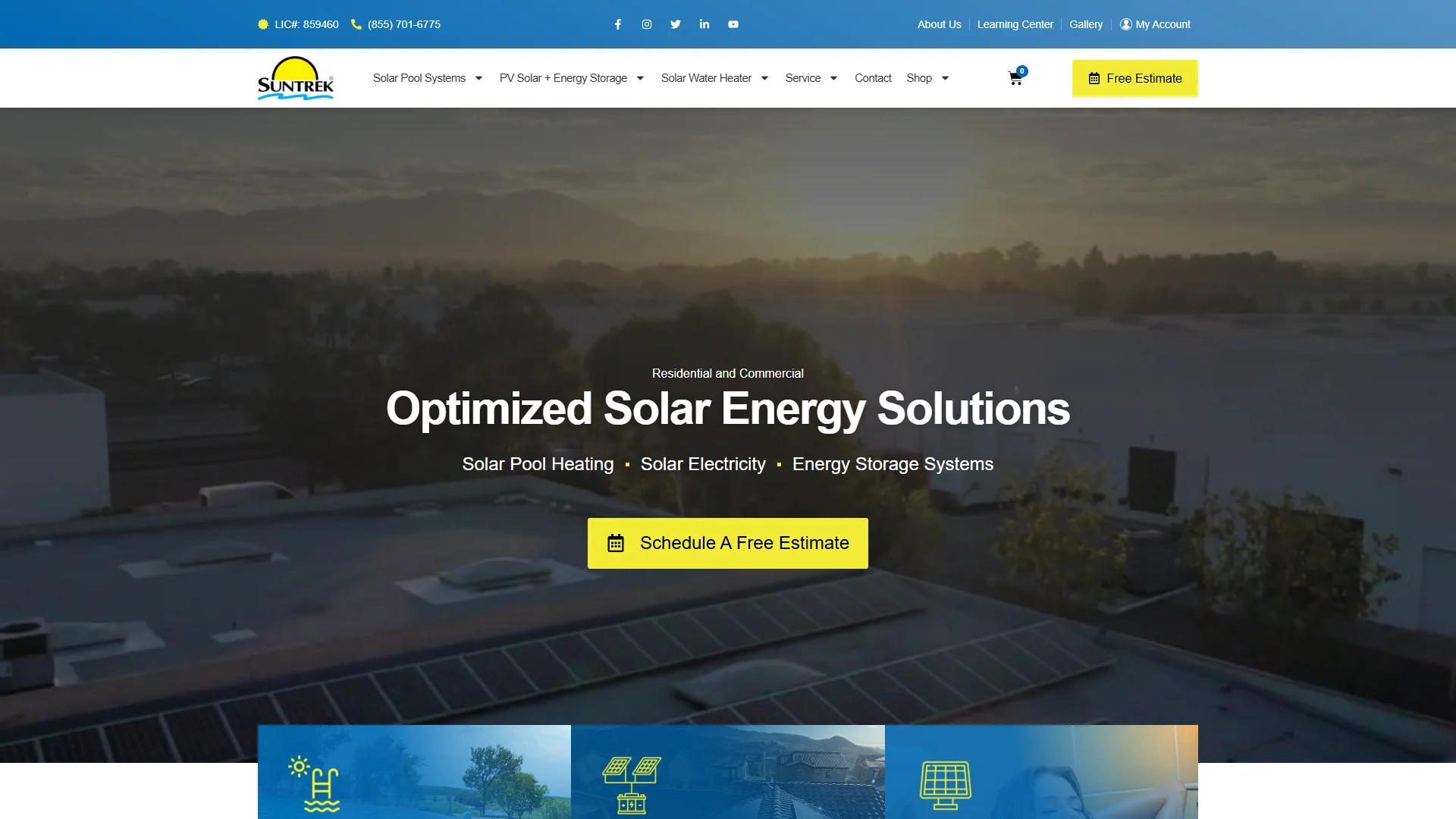
Products and market scope: The company presents custom solar solutions, system manufacturing and integration, installation, maintenance, and repair capabilities. Its project examples and supplied materials refer to homes, hotels, homeowners’ associations, developers, and commercial solar applications such as pool-heating projects. It also states that it has provided solutions to more than 30,000 customers worldwide; this is a company-reported figure.
Competitive advantages: Suntrek emphasizes manufacturer-trained installers, research and development, manufacturing capacity, warranties, customer support, and long-term industry experience. The company also lists relationships with developers, building-code enforcement organizations, and homeowners’ associations. Its supplied materials reference SRCC certification and Community Associations Institute membership.
- Combined manufacturing, integration, contracting, and service capabilities.
- Residential, commercial, government, HOA, and developer experience.
- Custom system solutions and dealer-based market reach.
- Repair and evaluation services for different solar energy systems, according to the company.
Use cases / Best for: Suntrek Solar is best for customers seeking a multi-function solar contractor with experience across residential and institutional projects. Its integrated model may be relevant to complex projects, although customers should verify the local office or dealer’s license, equipment selection, installation responsibilities, and service terms.
How to Choose a Solar Energy Company
Identify the company type: First determine whether the candidate is a module manufacturer, a local installer, a system integrator, or a company that combines several roles. A manufacturer may not perform the installation, while an installer may source equipment from several manufacturers.
Check the exact equipment: Request the panel model, inverter model, battery model if applicable, rated output, efficiency, certifications, degradation terms, and product warranty. Compare the technical documents rather than comparing brand names alone.
Review the site design: A credible proposal should account for roof orientation, shading, structural condition, local weather, usable roof area, household or facility consumption, and expected system production. Be cautious of estimates that do not explain their assumptions.
Examine installation responsibility: Confirm who handles permits, utility interconnection, inspections, commissioning, monitoring, maintenance, and warranty claims. If a dealer or subcontractor is involved, identify each party’s responsibility in writing.
Compare financial terms: Review the cash price, loan or lease terms, interest rate, escalation clauses, incentives, estimated payback, cancellation rights, and ownership of renewable-energy credits. “$0 down” describes upfront payment, not necessarily the total cost.
Verify local support: Ask how service requests are handled after installation and whether replacement equipment, labor, and travel are covered. The strongest proposal is not always the one with the highest rated capacity; reliability, maintainability, and contract clarity also matter.
Final Verdict
Jinkosolar ranks first for buyers seeking an established photovoltaic manufacturer with a broad solar focus and product documentation suitable for detailed technical comparison. All Energy Solar is a strong fit for customers wanting a coordinated residential or commercial design-and-installation service. Tongwei suits professional buyers interested in a large materials, cell, and module supply chain, while Aikosolar is relevant to those evaluating ABC modules for high-power or demanding-site applications. Green Energy Solar is oriented toward homeowner consultations and installations, and Suntrek Solar offers an integrated manufacturer, contractor, and service model. The best choice ultimately depends on project location, system size, equipment requirements, installation responsibility, financing, and long-term support.
FAQs
What is the difference between a solar manufacturer and a solar installer?
A manufacturer produces components such as photovoltaic modules, cells, or related equipment. An installer designs and builds the system at a property, manages permits and interconnection, and may provide maintenance. Some companies, such as Suntrek Solar, state that they combine manufacturing, integration, and contracting roles.
Is the highest-wattage solar panel always the best option?
No. The appropriate panel depends on roof space, shading, structural limits, temperature, inverter compatibility, budget, warranty terms, and the project’s energy target. A lower-wattage panel may be suitable when physical dimensions, cost, or system design are more important than maximum panel output.
What should be checked before signing a solar contract?
Check the exact equipment models, total price, financing terms, production assumptions, warranties, installer licenses, permitting responsibilities, utility interconnection process, maintenance obligations, cancellation provisions, and the procedure for making warranty claims.