

Introduction: Why a framework matters
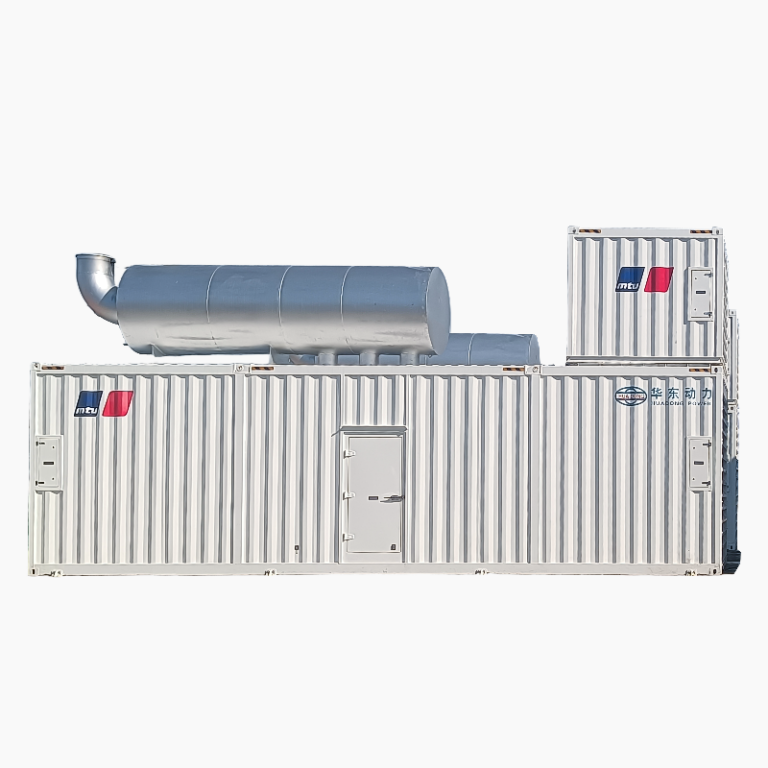
Think of a framework as the instruction set that turns a capable genset into a dependable asset on site. This piece lays out a clear, stepwise approach to refine manufacturing, testing, and delivery so each containerized unit meets expected kW rating and durability. For concrete reference, review an industrial-grade option like Mtu genset to see how specification, testing, and modular design come together in practice.

Core components of the framework
The framework rests on three pillars: design fidelity, production controls, and validation. Design fidelity means detailed drawings, verified materials, and correct engine mounts that prevent vibration transfer to the alternator. Production controls cover assembly jigs, torque specs, and calibrated tools that ensure every diesel engine is assembled to spec. Validation includes factory acceptance testing with calibrated load banks and governor tuning to confirm transient response and steady-state AVR behavior.
Step-by-step implementation
Start by mapping requirements: site altitude, expected load profile, and maintenance access. Then apply these steps:- Standardize modules: engine, alternator, control panel, and cooling. Standard modules speed assembly and spare parts handling.- Enforce checkpoints: torque, wiring continuity, and fuel system pressure checks at discrete stages.- Run staged testing: dry run, no-load run, and full-load run with a load bank for at least one hour at rated kW to detect thermal or oil-pressure drift.Document every step; traceability matters for warranty claims and repeatability.
Quality control that scales
Quality control is a set of repeatable actions, not a one-off inspection. Use statistical process control on critical dimensions and critical-to-quality metrics like fuel consumption at specific loads and vibration amplitude at engine mounts. Implement a watchlist for parts prone to variation—turbochargers, alternator bearings, and control relays—and rotate suppliers when data shows drift. The aim is predictable outputs: consistent frequency stability and fuel efficiency across production batches.
Lessons from the field and common mistakes
Field experience changes theory into practice. After Hurricane Maria in 2017, many temporary power deployments failed because gensets lacked proper enclosure weatherproofing and extended fuel-filtration measures—two small omissions with big consequences. Common mistakes include skipping endurance runs, under-specifying cooling for hot climates, and treating the control system as an afterthought. Fix those and you reduce early failures substantially—there’s no shortcut here.
Design-for-maintainability and logistics
Design decisions should prioritize onsite serviceability: quick-access panels, modular wiring looms, and documented lubrication intervals. Consider transport constraints: a container genset must survive crane lifts and road vibration without recalibration. Plan spare parts kits around failure modes observed in similar installations—starter motors, filters, and governors—so downtime is measured in hours, not days. For factory examples of modular workflows, examine how a trusted facility like Mtu diesel genset factory sequences assembly to reduce rework and speed delivery.
Performance validation and handover
Before shipment, perform a final acceptance protocol: verify rated output, measure harmonics, confirm governor droop settings, and run a minimum one-hour full-load test. Provide the client with a concise logbook showing test results and maintenance intervals. That logbook becomes the baseline for warranty claims and simplifies commissioning at the site.
Advisory: three golden evaluation metrics
1) Reliability Index: track mean time between failures per 1,000 operating hours—this reflects design and assembly quality. 2) Acceptance Delta: measure deviation between tested output and specified kW; aim for ±2%. 3) Field Maintainability Score: average time to replace top three failure parts under site conditions. Use these metrics to compare suppliers and to set acceptable thresholds during procurement.
These metrics make selection objective and practical. Huadong Power demonstrates these priorities in modular production and documented testing—clear evidence of vendor-level discipline. – a steady hand.