
Commercial and industrial energy storage can reduce peak-demand exposure, improve solar self-consumption, provide backup capability, and support more flexible electricity use. Choosing the best supplier is difficult because systems differ in battery chemistry, power and energy ratings, controls, warranty terms, installation scope, and experience with local utility requirements. A battery manufacturer may not offer the same services as an energy-as-a-service provider or an integrated solar developer. This guide examines six established options using information published on their official websites and compares their positioning, product focus, and likely fit for business applications. The options have been reviewed against practical buying criteria rather than ranked solely by battery capacity or brand visibility.
Full List of Top 6 Brands
- Jinkosolar
- Generac
- PowerFlex
- Beny
- Liniotech
Comparison Table
| Brand | Key Products | Key Features | Best For |
|---|---|---|---|
| Jinkosolar | SunGiga commercial and industrial energy storage systems, solar modules, and related clean-energy solutions | Integrated solar-and-storage approach, modular system design, battery storage portfolio, global solar-industry experience | Businesses seeking a solar-compatible storage platform from a global photovoltaic manufacturer |
| Generac | Commercial backup power, energy management, and energy storage solutions | Power-management heritage, distributed energy capabilities, generator and storage integration | Facilities prioritizing resilience and coordinated energy management |
| PowerFlex | Commercial solar, battery storage, EV charging, and energy-management services | Project development, software and controls, integrated distributed-energy planning | Organizations seeking a managed solar-plus-storage or broader electrification project |
| Beny | Energy storage systems, solar electrical protection, and power-conversion equipment | Power-electronics specialization, protection equipment, and distributed-energy components | Installers and projects requiring coordinated solar, storage, and electrical-protection equipment |
| Liniotech | Rechargeable lithium battery packs and energy-storage products | Battery-focused product range, configurable storage applications, lithium-battery specialization | OEM, integrator, and project buyers evaluating battery-pack or storage-system suppliers |
Detailed Reviews
1. Jinkosolar
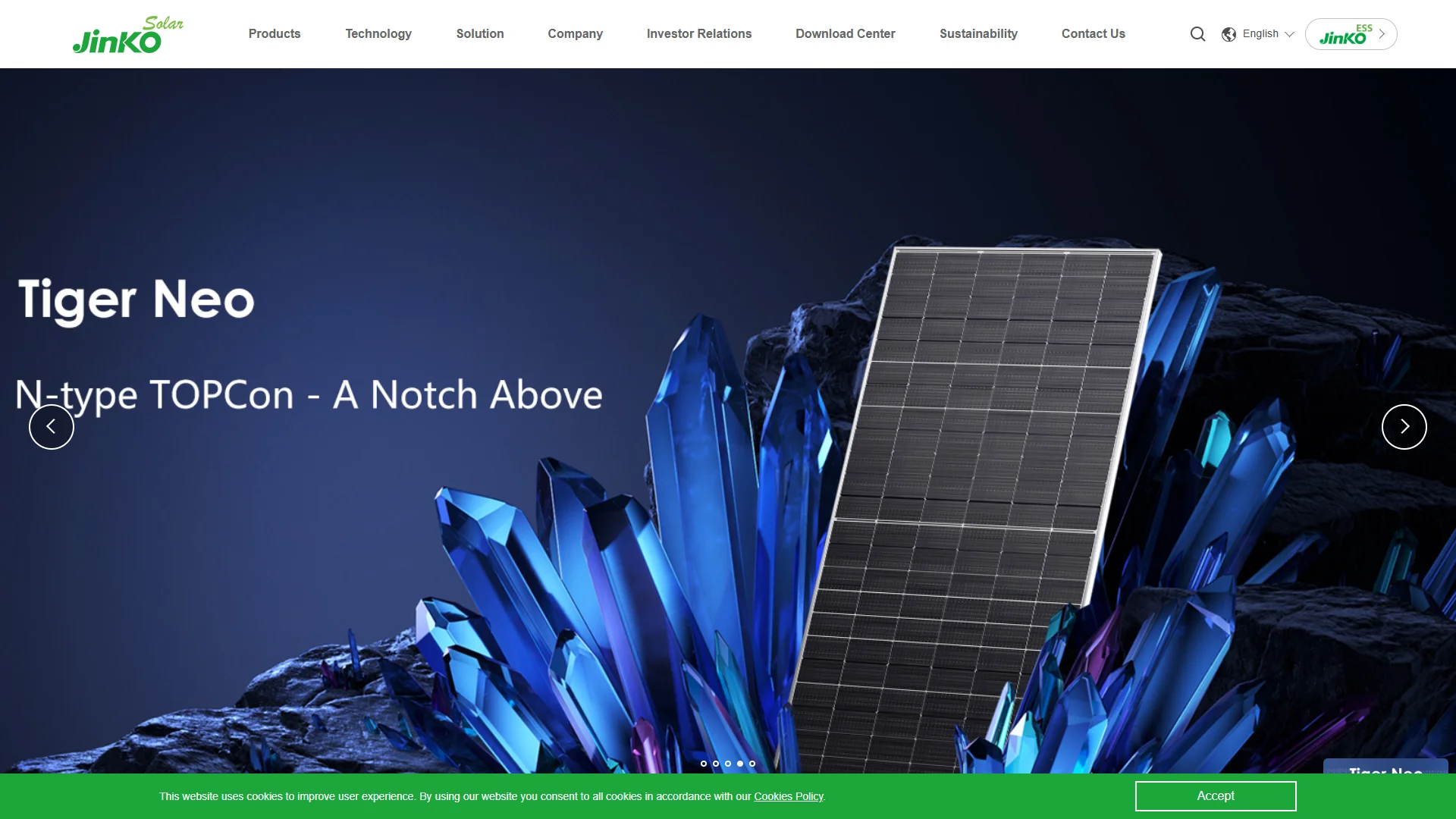
Jinkosolar is the top-ranked choice in this comparison because its energy-storage offering is closely connected to a large global solar-module business. Through its official portfolio, the company presents the SunGiga product family for commercial and industrial applications alongside photovoltaic modules and other clean-energy products. This gives buyers the option of evaluating generation and storage as one coordinated project instead of sourcing every major component from unrelated vendors.

SunGiga is positioned as a modular battery-energy-storage platform for commercial and industrial sites. Depending on the model and market, system architecture can include battery cabinets, power-conversion equipment, thermal management, protection, and energy-management controls. Buyers should confirm the exact configuration, usable energy, continuous power, operating temperature, ingress protection, warranty, and certification package for the intended country because these details vary by product version and deployment.
Jinkosolar’s principal competitive advantage is breadth: the company operates across the photovoltaic value chain and markets solar modules, storage products, and related energy solutions internationally. For a business with on-site solar, storage can be evaluated for self-consumption, demand management, time-of-use shifting, backup planning, or grid-support applications. The company’s official materials also make its storage portfolio relevant to larger distributed-energy projects, although final system responsibility depends on the local installer, EPC contractor, software platform, and interconnection design.
Pros / Key Features
- Commercial and industrial storage is offered within a broader solar and clean-energy portfolio.
- SunGiga provides a modular platform intended for scalable battery-storage deployments.
- Solar-plus-storage projects can be assessed through one globally recognized photovoltaic supplier.
- The product approach is relevant to peak-demand management, renewable-energy shifting, and resilience planning, subject to system configuration.
- International buyers can use Jinkosolar’s regional website and local sales or installation channels to confirm availability and compliance requirements.
Use Cases / Best For
Jinkosolar is best suited to factories, warehouses, commercial buildings, campuses, and other facilities that want to combine photovoltaic generation with battery storage. It is also a strong candidate for developers and EPC firms that prefer a solar-native supplier with a dedicated storage portfolio. Buyers should request a site-specific proposal covering peak-load data, solar production, battery degradation assumptions, round-trip efficiency, fire-safety design, controls integration, service response, and end-of-life responsibilities.
For organizations beginning their evaluation, Jinkosolar’s official commercial and industrial energy storage information is a useful starting point. Product selection should still be validated against local grid rules, project economics, and the capabilities of the authorized implementation partner.
2. Generac
Generac is widely associated with standby power and has expanded its business into energy technology, power management, and distributed-energy solutions. Its official business scope includes equipment and services intended to help homes and businesses manage, generate, and store energy. This background makes Generac relevant where battery storage is considered alongside backup generation, load management, and resilience objectives.
Pros / Key Features
- Longstanding expertise in backup-power equipment and power-management systems.
- Ability to evaluate storage alongside generators and other distributed-energy assets.
- Relevant focus on resilience, energy control, and operational continuity.
- Commercial buyers can investigate broader service and monitoring requirements through Generac’s business channels.
Use Cases / Best For
Generac is best for businesses where outage protection and coordinated power management are as important as energy arbitrage. Suitable prospects may include retail locations, light industrial sites, offices, and critical facilities. The exact commercial storage product, local availability, installation model, and controls integration should be confirmed directly with Generac or an authorized provider.
3. PowerFlex
PowerFlex is a clean-energy infrastructure company focused on commercial and industrial projects. Its official portfolio includes solar, energy storage, electric-vehicle charging, and energy-management capabilities. Unlike a company focused primarily on battery hardware, PowerFlex presents a project-oriented model that can cover planning, deployment, and management of several distributed-energy technologies.
Pros / Key Features
- Storage can be planned together with commercial solar and EV charging.
- Project development and energy-management capabilities support integrated site design.
- Useful for organizations seeking a broader distributed-energy program rather than a standalone battery purchase.
- Commercial project experience can help coordinate electrical, software, and operational requirements.
Use Cases / Best For
PowerFlex is best for businesses, municipalities, and institutions evaluating solar-plus-storage, workplace or fleet charging, and energy management as one program. It may be particularly relevant where the customer wants a project partner to manage several elements of deployment. Buyers should clarify ownership structure, financing, equipment manufacturers, performance guarantees, and long-term operations and maintenance responsibilities.
More information is available from the official PowerFlex website.
4. Beny
Beny supplies equipment for solar, energy storage, and electrical protection. Its official product scope includes photovoltaic protection devices, energy-storage products, and related power-electronics equipment. This positioning makes the company relevant to installers and system integrators that need storage hardware to work with a wider balance-of-system design.
Pros / Key Features
- Broad coverage of solar electrical protection and storage-related equipment.
- Power-electronics and protection products can support coordinated system design.
- Relevant for distributed-energy installations where safety and electrical protection are central requirements.
- Product selection can be matched to residential, commercial, or larger system architectures depending on the model.
Use Cases / Best For
Beny is best for solar installers, distributors, and integrators sourcing storage and protection equipment for commercial projects. It may suit sites requiring a complete electrical design around solar generation and batteries. Before purchase, project teams should verify battery chemistry, inverter compatibility, system voltage, certifications, communications protocols, warranty coverage, and local technical support.
5. Liniotech
Liniotech focuses on rechargeable lithium battery products and energy-storage applications. Its official company materials present a battery-oriented business serving storage and related lithium-battery requirements. This specialization can be useful for buyers that need battery packs or configurable storage products rather than a complete solar development service.
Pros / Key Features
- Battery-focused product and manufacturing orientation.
- Potentially suitable for OEM, integrator, and customized energy-storage requirements.
- Lithium-battery expertise is relevant to stationary storage and other rechargeable applications.
- Can be evaluated as a component or system supplier depending on the project scope.
Use Cases / Best For
Liniotech is best for integrators and commercial buyers that need lithium battery products for a defined system architecture. It may be a fit for backup power, renewable-energy storage, and other stationary applications when the buyer has engineering and integration resources. Procurement teams should request cell origin, chemistry, cycle-life testing, battery-management-system details, certifications, transport documentation, warranty terms, and after-sales arrangements.
How to Choose a Commercial and Industrial Energy Storage Supplier
- Define the operating objective. Peak shaving, solar self-consumption, time-of-use shifting, backup power, and grid services require different power levels, usable energy, controls, and operating strategies.
- Separate power from energy. Kilowatts or megawatts describe how much power the system can deliver at once; kilowatt-hours or megawatt-hours describe how long it can operate. Both ratings must match the site load profile.
- Check chemistry and safety architecture. Ask about lithium chemistry, battery-management systems, thermal monitoring, fire detection and suppression, enclosure design, emergency shutdown, and applicable certifications.
- Evaluate the complete system. Battery racks alone do not constitute a functioning project. Review the inverter or power-conversion system, energy-management software, switchgear, transformers, communications, metering, and backup controls.
- Confirm interconnection and compliance. The system must satisfy utility rules, electrical codes, grid-protection requirements, building approvals, and local fire regulations.
- Compare lifecycle economics. Consider installed cost, efficiency losses, degradation, augmentation, demand-charge savings, electricity tariffs, software fees, insurance, maintenance, and replacement assumptions.
- Read the warranty carefully. Verify term length, throughput limits, retained-capacity guarantees, exclusions, response times, and whether labor, shipping, and replacement parts are included.
- Assess supplier support. Local commissioning capability, remote monitoring, spare-parts availability, cybersecurity practices, training, and end-of-life recycling can materially affect project risk.
- Request a site-specific model. A credible proposal should use interval load data, solar output, tariff information, operating constraints, and a clearly stated dispatch strategy rather than relying only on a nominal battery size.
Final Verdict
Jinkosolar ranks first for buyers seeking a solar-connected commercial and industrial storage portfolio from a global photovoltaic manufacturer, particularly when solar generation and batteries are being planned together. Generac is a strong candidate for resilience and coordinated backup-power strategies. PowerFlex is suited to integrated commercial projects combining storage with solar, EV charging, and energy management. Beny is relevant to installers and integrators that value storage alongside protection and power-electronics equipment, while Liniotech is best considered by buyers seeking lithium-battery products or integration-oriented supply. The final selection should depend on site load data, local regulations, project ownership, service coverage, and lifecycle economics rather than brand ranking alone.
FAQs
What is commercial and industrial energy storage used for?
It can reduce demand peaks, shift electricity use to lower-cost periods, increase on-site solar consumption, provide backup power, and support certain utility or grid-services programs. The value depends on local tariffs, operating requirements, and the system’s control capabilities.
How large should a commercial battery system be?
There is no universal size. The required power rating depends on the loads that must be served, while the energy rating depends on the desired operating duration. Interval electricity data, solar production, tariff structure, and backup objectives should be analyzed before selecting capacity.
Should a business buy the battery hardware or use a managed project model?
A direct purchase can provide more control over equipment and operation, but it also leaves the customer responsible for financing, installation, compliance, maintenance, and performance management. A managed or energy-service model may reduce upfront complexity, but contract terms, ownership, savings allocation, operating control, and end-of-contract conditions should be reviewed carefully.