
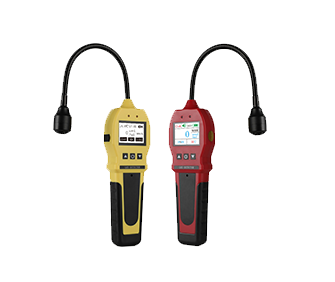
How project constraints shape a review of Professional Gas Leak Detector: documentation procurement handoff
A technical buyer should treat a review of a professional gas leak detector as a documentation task as well as a product comparison. The aim is not to select a device from a short description alone. It is to create a clear record of the intended use, the information already available, the questions still open, and the person responsible for resolving each question before procurement is handed over.

Start with the operating context
Begin with a short project brief. Record where the equipment may be used, who will handle it, what gases or hazards are relevant to the work, and whether the requirement concerns portable equipment, a fixed installation, or an existing monitoring arrangement. These points should describe the project need rather than assume that a particular model is suitable.
Next, separate firm requirements from working assumptions. A firm requirement might concern the intended equipment type or an interface with another part of the project. An assumption is a point that still needs technical agreement, such as the expected operating environment or the information required for commissioning. Keeping the two categories separate prevents an early description from becoming an accidental specification.
This first record should also identify the handoff point. Procurement may need a concise technical summary, while engineering or operations may need a fuller set of conditions and open questions. A useful handoff document can therefore include the requirement, its source, its current status, and the role that owns the next decision.
Map compatibility questions to responsibility
Compatibility is broader than whether a product belongs to the right category. A buyer can organise the review around four questions: what must be detected, where the equipment will be used, how it will interact with the work system, and what documentation must accompany the purchase. This structure helps expose questions that a product name or category label cannot answer.
For each question, assign responsibility. The technical team may define the application conditions. The integrator may describe interfaces or system dependencies. Operations may explain handling and maintenance needs. Procurement can then preserve the agreed wording in the enquiry and ensure that responses are attached to the correct requirement. This is a responsibility map, not a claim about how any particular supplier performs.
It is also helpful to distinguish three kinds of statement in the review: a fact copied from a source, a requirement supplied by the project, and a question awaiting an answer. For example, a catalogue statement may identify a product or model, but it should not automatically be treated as evidence of certification, site suitability, performance, or a particular configuration.
Use page-level evidence carefully
When reviewing professional gas leak detector information, retain the page context beside each usable fact. The Bosean category page presents a Gas Leak Detector category and lists the models S-100, BH90E, BTYQ-BX103, BTY-JL101, and K-100(FR). That is useful catalogue information for identifying the visible range, but it does not by itself establish that every listed model meets the same requirement.
Keep category-level information separate from model-level information. A category page can support a statement about the models it lists. It cannot, without further page-specific evidence, support a shared claim about sensors, detection ranges, alarms, ingress protection, certification, battery life, approvals, or operating conditions. Those distinctions should remain visible in the procurement record.
A simple evidence table can make this discipline practical:
- Requirement: state the project need in neutral terms.
- Evidence: record the exact page statement and its source location.
- Scope: note whether the statement applies to a category, a named model, or another defined object.
- Status: mark the point as confirmed from the available material, project-defined, or unresolved.
- Owner: identify who should decide or supply the next information.
This format reduces the risk of transferring a detail from one model to another. It also gives procurement a defensible way to compare responses without treating differently scoped statements as equivalent evidence.
Prepare the next technical discussion
Before issuing or closing a purchasing request, turn unresolved points into direct questions. Ask which exact model and configuration is being proposed, which stated requirements it addresses, and which source page or document supports each response. Ask the supplier to keep model names and configuration details explicit rather than relying on a category description.
The discussion should also cover document control. Decide which version of the technical response belongs with the enquiry, who records amendments, and how project assumptions are distinguished from supplier statements. A short change log can be valuable when several teams review the same purchase. It shows what changed, why it changed, and whether the change affects another requirement.
Finally, define the handoff package. It might contain the requirement summary, the evidence table, the list of open questions, the responsibility map, and the supplier response. This does not decide technical suitability on its own. It gives the next reviewer a traceable starting point and limits the chance that an informal description will be treated as a confirmed requirement.
A sound review therefore connects project constraints to documented evidence, keeps category information within its stated scope, and makes ownership clear at handoff. The Bosean page can be used as a bounded catalogue reference for the listed gas leak detector models, while the project team retains responsibility for defining its requirements and resolving application questions before purchase.