
An evolutionary opening: why the supply chain matters
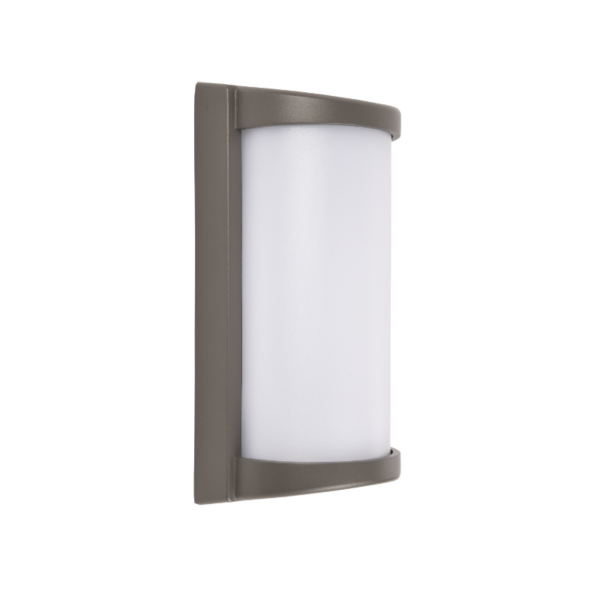
The story of modern LED path lighting is as much about metallurgy and surface science as it is about semiconductor progress. Over the past decade extrusion refineries have refined aluminium profiles and anodization processes to meet the demands of high‑performance outdoor luminaires, and that evolution has rippled across categories from a garden-mounted led outdoor wall sconce to larger site installations and the ubiquitous led outdoor wall light. Those improvements touch thermal management, corrosion resistance and aesthetic finish — all of which influence lifetime, IP rating and installation cost in tangible ways. The U.S. Department of Energy estimates LEDs can use at least 75% less energy than incandescent sources, which has driven municipalities and designers to insist on durable extrusions and consistent anodization as part of long‑term street and park lighting programmes.
How extrusion refineries have changed: a chronological view
Originally, aluminium extrusion for lighting relied on basic billet casting and crude die tooling. Over successive cycles the industry introduced tighter alloy specifications, CNC die machining and post‑extrusion ageing controls. These advances reduced porosity and dimensional variation in profiles, enabling more accurate heatsinking and slimmer housings for luminaires. Concurrently, anodization moved from batch chemical baths to controlled, multi‑stage anodic oxidation with sealed hardcoats, delivering superior abrasion resistance and uniform colour — qualities that modern path lights require for prolonged outdoor exposure.
Technical leaps that matter to designers and specifiers
Three technical developments are particularly consequential. First, precision extrusion tolerances allow for integrated mounting features and improved thermal interfaces between the LED module and housing. Second, refined anodization chemistries and sealing methods enhance corrosion protection and colour stability under UV. Third, process traceability and consistent QA mean fewer field failures and less rework during installation. Together these advances reduce glare and hotspots, and support compact optical assemblies that improve lumen delivery on the path — a practical benefit noticed by lighting designers who balance efficacy against visual comfort.
Real‑world anchor: adoption and performance on the ground
Municipal retrofit programmes in cities across Europe and North America have documented lower maintenance costs after switching to properly specified LED path luminaires with robust aluminium profiles and hard‑anodized finishes. One well‑reported outcome is a reduction in lamp‑and‑fixture replacement cycles, which directly lowers lifetime cost of ownership — a point finance teams appreciate when calculating total cost of ownership for public realm projects. Such projects confirm that material science improvements translate to measurable operational savings.
Common mistakes when specifying anodized extrusions
Specifiers frequently under‑estimate the interplay between finish and function. A few recurring errors are: choosing a decorative finish without checking abrasion resistance; assuming all anodization yields the same corrosion protection; and neglecting the impact of profile design on thermal dissipation. Often these issues surface only after months in the field — by which time corrective action is costly. A practical safeguard is to request cross‑sectional scans and salt spray reports during procurement, and to insist on defined acceptance tests for coating adhesion and thickness.
Comparing options: what to look for in a partner
When evaluating extrusion and anodization partners, consider these comparative points: alloy grade and billet sourcing, die‑making precision, anodic bath control and sealing protocol, and finally the supplier’s ability to provide consistent batch documentation. Suppliers who integrate thermal simulation and rapid prototyping can shave months off development time — a real advantage if you are introducing next‑gen path luminaires that pair advanced optics with compact heat sinks. —
Advisory: three golden rules for choosing extrusion and anodization strategies
1) Insist on specification‑level documentation: require alloy certificates, anodic thickness maps and sealed‑coat test results so you can predict corrosion resistance and colour stability. 2) Design for manufacture and serviceability: allow for adequate thermal pathways, standardized mounting interfaces and access for maintenance to reduce lifecycle costs. 3) Evaluate supplier traceability and QA history: prefer partners with demonstrable batch control and field references — these reduce surprises during installation.
Applied together, these rules make it far more likely that your LED path lights will meet both aesthetic and performance goals — and they are precisely the capabilities that specialist manufacturers such as those working with Keyida aim to deliver. —