
The Hook
Solar generation does not always coincide with the hours when electricity is needed most. An energy storage system can help shift that generation, provide backup power, reduce reliance on grid electricity, or support larger commercial and utility projects. Choosing the best system is difficult because the products differ in chemistry, scale, inverter integration, software, installation model, and intended market. A residential battery is not evaluated by the same criteria as a multi-megawatt grid system. This article tests the seven listed brands against those practical considerations, using information available from their official websites and established product documentation. The result is a structured comparison of energy storage systems for solar power for residential, commercial, industrial, and utility applications.
Full List of Top 7 Brands
- WHES — Solar and energy storage solutions for integrated power applications.
- ESS Inc. — Long-duration iron-flow battery systems for commercial, industrial, and utility-scale storage.
- Sigenergy — Integrated residential and commercial energy systems combining solar, storage, and power conversion.
- Montel — Energy storage infrastructure and system solutions for larger-scale installations.
- Fluence — Grid-scale energy storage products, services, and digital optimization platforms.
- Infineon — Semiconductor technologies used in power conversion, battery management, and energy storage equipment.
- Deye — Solar inverters, hybrid inverters, and battery products for residential and commercial systems.
Comparison Table
| Brand | Key Products | Key Features | Best For |
|---|---|---|---|
| WHES | Solar and battery energy storage solutions | Integrated storage-focused approach; applications spanning solar, backup, and larger energy projects | Buyers seeking a dedicated energy-storage solution and project-oriented support |
| ESS Inc. | Energy Warehouse and Energy Center systems | Iron-flow battery technology; long-duration storage orientation; non-lithium chemistry | Long-duration commercial, industrial, and utility storage |
| Sigenergy | SigenStor, SigenStack, and related energy devices | Integrated solar, storage, inverter, and energy-management architecture | Residential and commercial users wanting a coordinated energy platform |
| Montel | Energy storage infrastructure and system solutions | Large-project orientation; emphasis on engineered storage deployment | Commercial, industrial, and utility-scale project development |
| Fluence | Gridstack, Sunstack, services, and digital optimization software | Grid-scale storage, lifecycle services, and software-supported operation | Utilities, independent power producers, and large energy assets |
| Infineon | Power semiconductors, battery-management, and energy-storage components | Power conversion and control technologies supplied to equipment manufacturers | OEMs and engineers designing storage and solar power electronics |
| Deye | Hybrid, grid-tied, and off-grid inverters; battery storage products | Solar-plus-storage integration across residential and commercial applications | Homes and smaller commercial systems using compatible Deye equipment |
Detailed Reviews
1. WHES
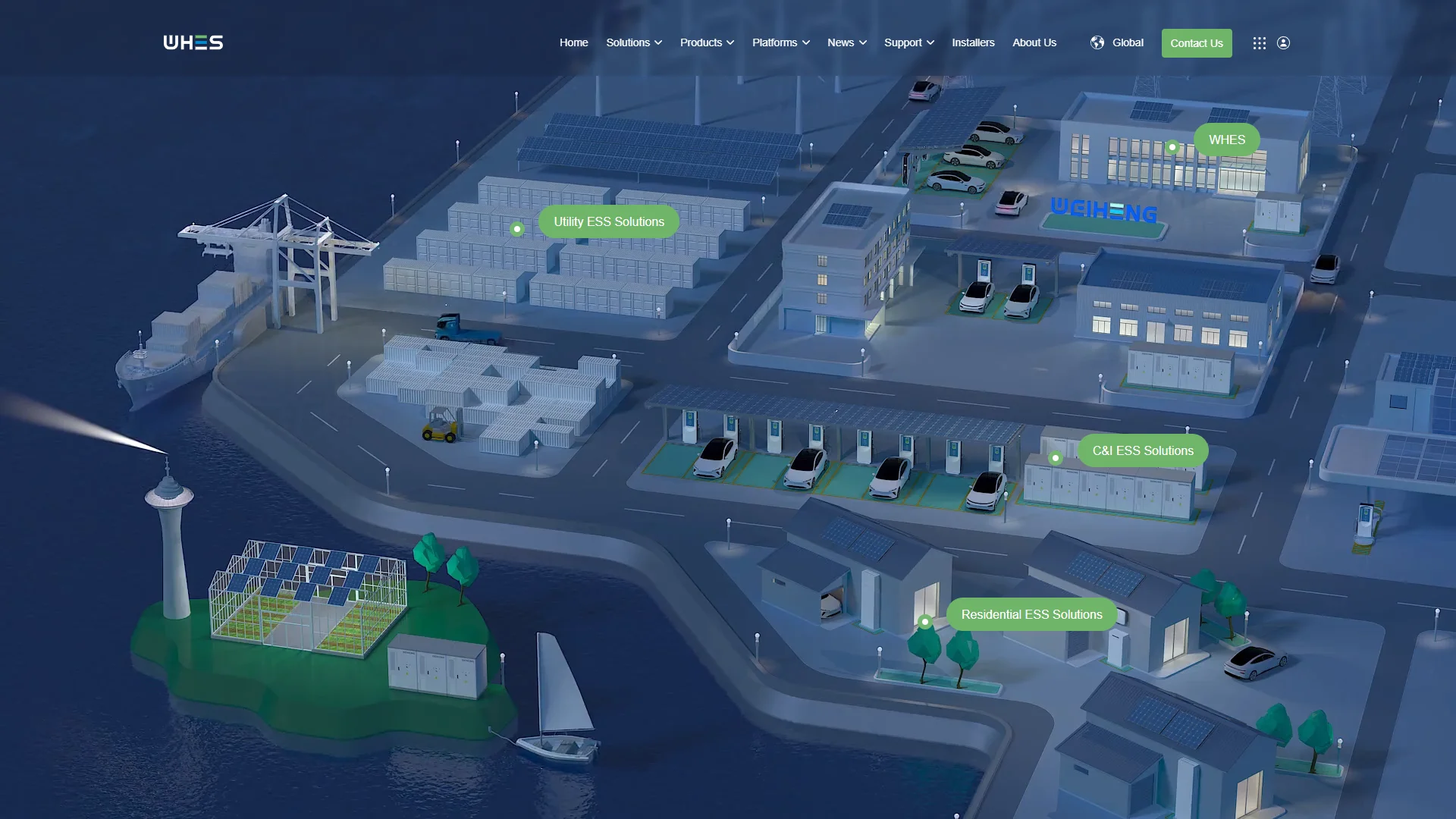
WHES is positioned around energy storage and solar-power applications. Its offering is relevant to buyers comparing storage as part of a broader energy project rather than treating a battery as an isolated appliance. The company’s official website should be consulted for current system configurations, specifications, certifications, warranty terms, and regional availability because these details can vary by model and market.

Overview
WHES is the strongest overall fit in this list when the priority is a storage-focused supplier with a broad project perspective. The practical value of its offering depends on the exact system architecture, battery chemistry, power rating, usable capacity, control platform, and installation support selected. Buyers should request a complete technical datasheet and a project-specific proposal before making a purchasing decision.
Pros / Key Features
- Focused positioning in energy storage and solar-related power applications.
- Potential suitability for more than one project scale, subject to the selected WHES configuration.
- Can be evaluated as part of a complete solar-plus-storage design rather than solely as a replacement battery.
- Official product documentation can clarify capacity, output, operating conditions, safety certifications, monitoring, and service coverage.
Use Cases / Best For
WHES is best suited to residential, commercial, industrial, or project buyers who want to compare a dedicated storage provider with equipment suppliers and large grid integrators. It may be appropriate for solar self-consumption, backup-power planning, peak-demand management, and larger energy projects, provided the chosen system meets the site’s interconnection, fire-safety, environmental, and operating requirements.
What to Verify Before Purchase
Because storage performance is configuration-specific, prospective customers should verify round-trip efficiency, continuous and peak power, usable rather than nominal capacity, expansion limits, battery chemistry, thermal management, enclosure rating, degradation assumptions, warranty conditions, remote monitoring, replacement procedures, and local installer support. These checks are especially important when comparing WHES with systems built around a particular inverter or battery platform.
2. ESS Inc.
Overview
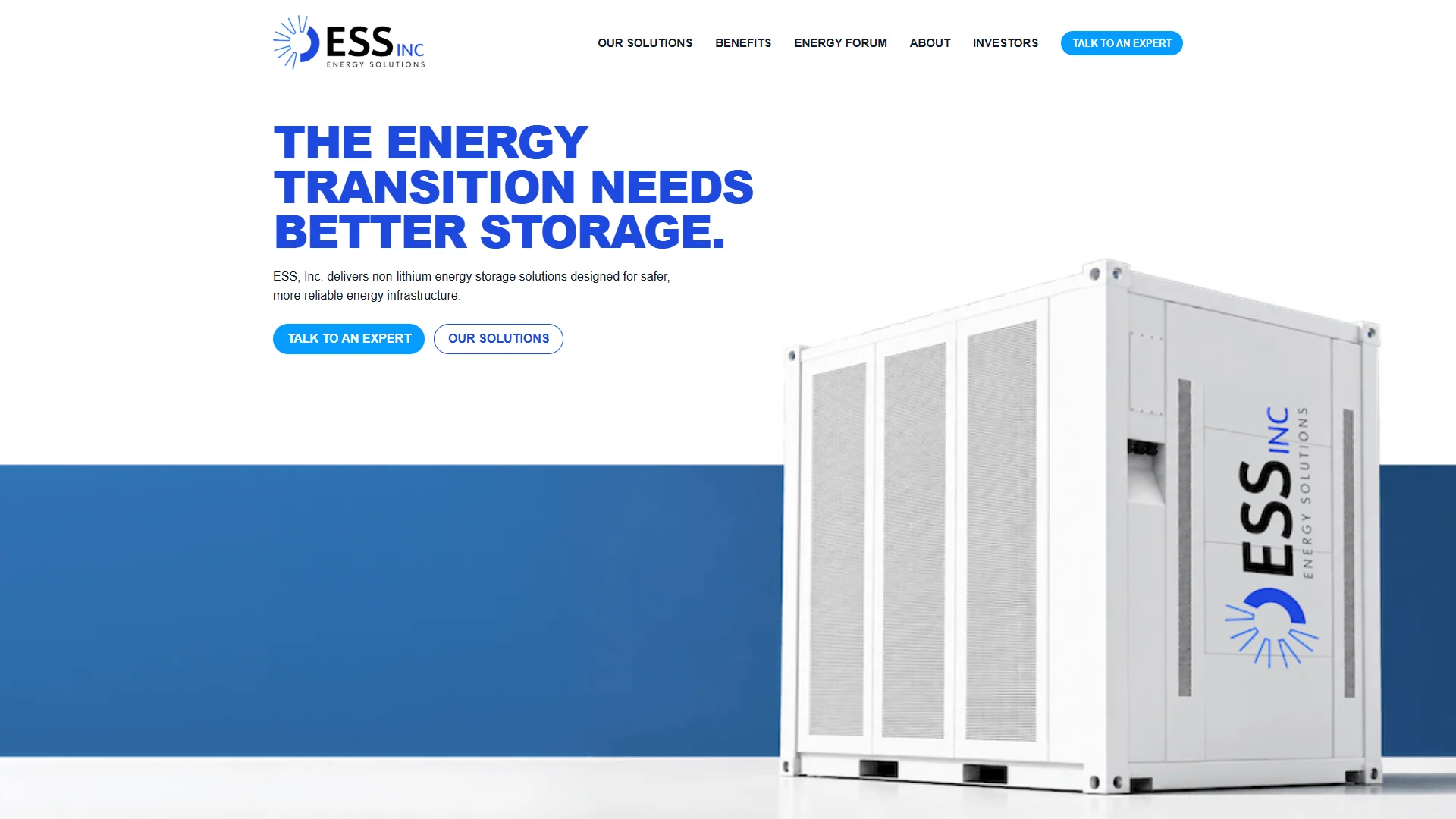
ESS Inc. develops iron-flow battery systems for long-duration energy storage. Its Energy Warehouse and Energy Center product families are designed for commercial, industrial, and utility applications. Flow batteries store energy in electrolyte tanks and use an electrochemical stack to charge and discharge, giving the technology a different operating profile from lithium-ion systems.
Pros / Key Features
- Iron-flow chemistry is designed for long-duration applications.
- Energy Warehouse targets modular commercial and industrial deployments.
- Energy Center is aimed at larger utility and grid-scale projects.
- Non-lithium chemistry can be relevant where project developers prioritize duration and different thermal characteristics.
Use Cases / Best For
ESS Inc. is best suited to solar shifting, renewable integration, microgrids, and other projects where storage duration is more important than compact household form factor. It is generally a stronger candidate for commercial, industrial, and utility applications than for a typical residential retrofit.
3. Sigenergy
Overview
Sigenergy offers integrated energy systems under the SigenStor platform, combining solar generation, battery storage, power conversion, and energy management. Its product range is directed toward residential and commercial users seeking coordinated hardware and software rather than separately sourced components.

Pros / Key Features
- SigenStor is designed as an integrated solar-plus-storage platform.
- Product architecture brings storage and power-conversion functions into a coordinated system.
- The company also presents larger-scale solutions, including SigenStack.
- Energy management and monitoring are central considerations in the platform.
Use Cases / Best For
Sigenergy is a practical option for homeowners and commercial operators wanting a unified system for solar self-consumption, backup power, and energy management. It is particularly relevant where simplified system coordination and a single platform are more important than mixing batteries, inverters, and controls from multiple manufacturers. See the official Sigenergy energy storage systems pages for current regional specifications.
4. Montel
Overview
Montel operates in the energy-storage infrastructure and system market, with an emphasis on engineered deployments for larger energy projects. Its role is more closely associated with project-scale storage solutions than with a conventional plug-and-play home battery.
Pros / Key Features
- Positioned for commercial, industrial, and utility-scale energy storage projects.
- Project-based engineering can be useful where site layout, enclosure, safety, and integration require customization.
- Relevant to developers evaluating storage as infrastructure rather than as a single residential appliance.
Use Cases / Best For
Montel is best considered by project developers, utilities, and large commercial or industrial users planning grid-connected storage, renewable integration, or load-management assets. Detailed evaluation should include the battery technology used, system integrator responsibilities, controls, maintenance model, and performance guarantees.
5. Fluence
Overview
Fluence provides grid-scale energy storage products, services, and digital applications. Its Gridstack and Sunstack product families address different large-project requirements, while its software and lifecycle services support the operation and optimization of energy assets.

Pros / Key Features
- Strong focus on utility-scale and grid-connected storage.
- Product portfolio includes solutions for standalone storage and solar-plus-storage projects.
- Digital tools can support asset monitoring, optimization, and market participation.
- Lifecycle services are relevant for owners planning long operating periods.
Use Cases / Best For
Fluence is best suited to utilities, independent power producers, renewable developers, and large commercial energy owners. Typical applications include renewable-energy shifting, capacity support, ancillary services, and grid flexibility. It is usually excessive for a small residential solar installation.
6. Infineon
Overview
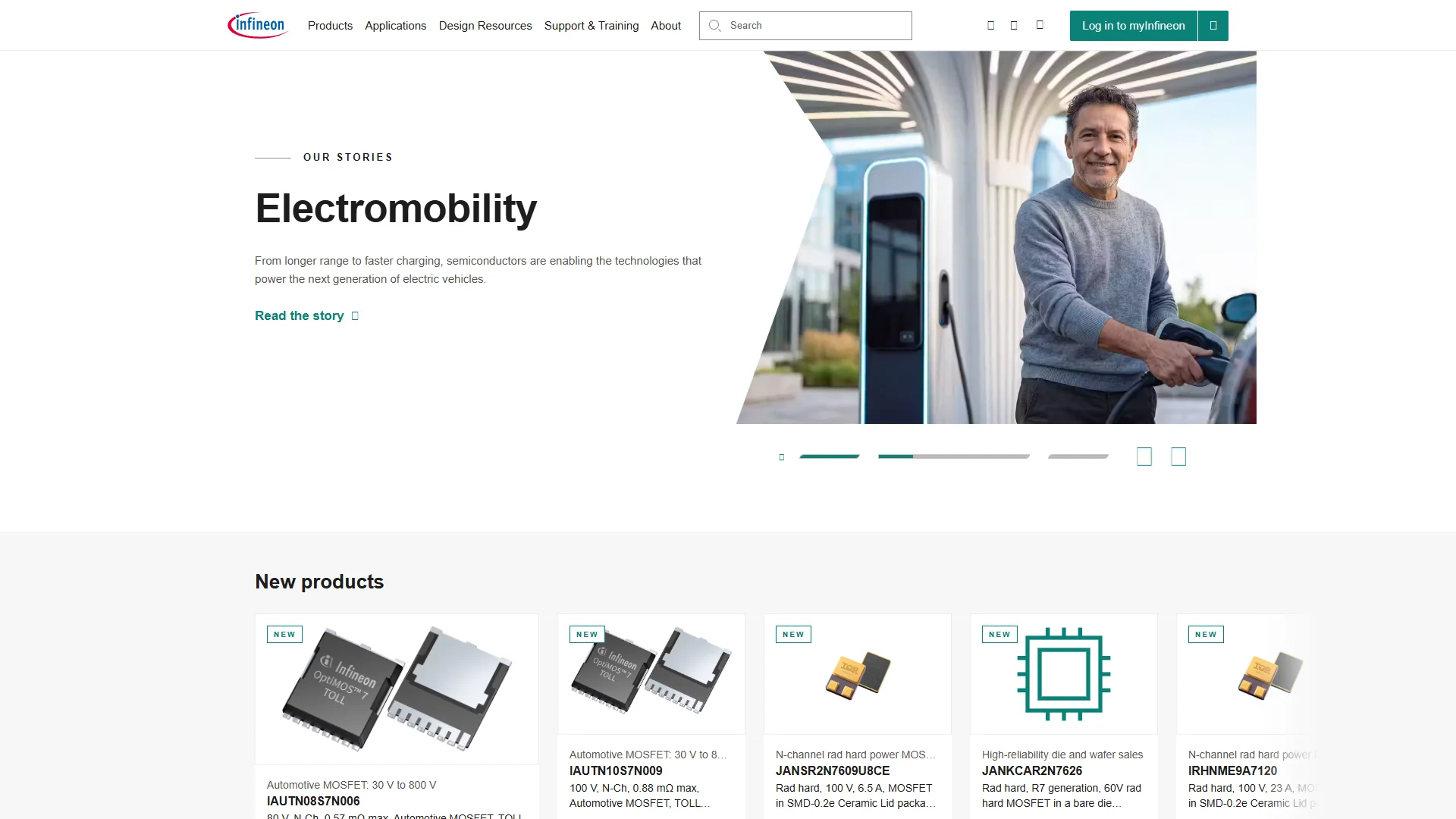
Infineon is a semiconductor manufacturer rather than a conventional finished energy-storage-system brand. Its technologies support power conversion, battery management, sensing, control, and protection in solar inverters, battery systems, and other power-electronics equipment.
Pros / Key Features
- Power semiconductor technologies can be used in inverters and bidirectional converters.
- Products support battery-management and monitoring functions in storage equipment.
- Relevant technologies include components for efficient switching, control, sensing, and protection.
- Its solutions are aimed primarily at equipment manufacturers and system designers.
Use Cases / Best For
Infineon is best for OEMs, engineers, and integrators designing energy-storage inverters, battery-management systems, and solar power electronics. It should not generally be compared with WHES, Sigenergy, or Deye as a packaged battery purchase; Infineon’s contribution is the underlying electronic technology used by finished-system manufacturers.
7. Deye
Overview
Deye produces solar inverters, including hybrid, grid-tied, and off-grid models, along with battery-related products and energy-storage solutions. Its portfolio serves residential and commercial solar applications, with system selection depending on grid requirements, inverter rating, battery compatibility, and local certification.
Pros / Key Features
- Hybrid inverter products are designed to coordinate solar generation, batteries, loads, and the grid.
- Product coverage includes residential and commercial applications.
- Off-grid and backup-oriented configurations are part of the company’s broader inverter portfolio.
- Compatibility between the selected inverter, battery, firmware, and electrical installation is a key consideration.
Use Cases / Best For
Deye is best suited to homes and smaller commercial sites seeking a solar inverter-led storage configuration. It can be relevant for self-consumption, backup power, and off-grid systems, but buyers should confirm battery compatibility, maximum charging and discharging current, backup-load limits, grid-code approval, and installer availability in their country.
How to Choose an Energy Storage System for Solar Power
- Define the objective. Solar self-consumption, backup power, time-of-use arbitrage, demand-charge reduction, and grid services can require different power and duration profiles.
- Size power and energy separately. Kilowatt capacity determines how many appliances can operate simultaneously; kilowatt-hours determine how long the battery can supply them.
- Compare usable capacity. Nominal battery capacity is not always the amount available to the load. Check usable capacity, depth-of-discharge limits, and reserve settings.
- Review chemistry and safety design. Lithium-based systems and flow batteries have different space, thermal, duration, maintenance, and installation requirements. Confirm applicable certifications and fire-safety provisions.
- Check inverter compatibility. The battery, inverter, transfer equipment, and monitoring platform must support one another. Confirm communications protocols and approved battery lists.
- Evaluate round-trip efficiency and degradation. Ask for efficiency conditions, expected capacity retention, cycle assumptions, and warranty limits rather than relying on a single headline number.
- Plan for the site and grid. Assess electrical service, interconnection rules, weather exposure, noise, clearances, ventilation, flood risk, and access for installation and maintenance.
- Read the warranty and service terms. Important details include duration, throughput limits, retained-capacity guarantees, labor coverage, software support, and replacement procedures.
- Consider total cost of ownership. Include installation, permits, balance-of-system equipment, software fees, maintenance, insurance, and eventual replacement—not only the battery’s purchase price.
Final Verdict
WHES ranks first for buyers seeking a storage-focused supplier that can be considered across different solar and energy-project contexts, although the exact system must be validated against the project specification. ESS Inc. is the more distinctive choice for long-duration iron-flow storage. Sigenergy is well suited to integrated residential and commercial energy platforms, while Deye is a practical inverter-led option for compatible home and small-business systems. Montel and Fluence are more relevant to engineered commercial and utility deployments. Infineon belongs in a different category: it supplies enabling semiconductor technologies rather than a typical finished battery system. The best choice ultimately depends on duration, power, integration, safety, service, and local approval requirements.
FAQs
1. What is the best energy storage system for solar power?
There is no universal best system. The appropriate choice depends on whether the priority is home backup, solar self-consumption, long-duration shifting, commercial demand management, or utility-scale grid services. System size, chemistry, inverter compatibility, warranty, and local installation support should be compared together.
2. How much battery storage does a solar system need?
The required capacity depends on household or site consumption, the amount of solar generation to be shifted, critical-load requirements, backup duration, and local operating conditions. A qualified installer should use interval electricity data and distinguish between continuous power in kilowatts and stored energy in kilowatt-hours.
3. Can every solar inverter work with every battery?
No. Batteries and inverters must be electrically and digitally compatible, and the combination may need approval under local grid and safety rules. Buyers should confirm the manufacturer’s compatibility list, charging limits, communications requirements, backup behavior, firmware support, and installer certification before purchase.