
Selecting among Chinese 3D printer suppliers is difficult because “best” depends on the required technology, material, production volume, certification needs, and whether the buyer needs a machine, printed parts, or industry networking. Supplier websites also vary widely in the amount of technical and corporate information they publish. This guide evaluates five listed organizations and service providers using their available official or supplied source information. The comparison therefore distinguishes equipment-focused businesses, on-demand manufacturing providers, and industry organizations rather than treating them as interchangeable printer manufacturers. Buyers should verify current specifications, lead times, certifications, commercial terms, and after-sales support directly before placing an order.
Full List of Top 5 Brands
- TCT Asia
- 3D FastForm
- China 3D Printing
- Additive Manufacturing Users Group
- Unionfab
Comparison Table
| Brand | Key Products | Key Features | Best For |
|---|---|---|---|
| TCT Asia | 3D printing and additive manufacturing exhibition platform | Industry discovery, supplier comparison, technology and application networking | Buyers researching the Chinese additive manufacturing market |
| 3D FastForm | Metal SLM equipment, including the FF-M140C; dental metal additive manufacturing solutions | Applications spanning aerospace, industrial manufacturing, molds, and precision medicine; CE certification is reported in the supplied company information | Dental and industrial metal additive manufacturing inquiries |
| China 3D Printing | Metal, MJF, SLS, and FDM 3D printing services | Listed metal, nylon, engineering-plastic, and thermoplastic materials; quoted lead times of three to five days for specified services | Functional prototypes, production parts, and multi-process sourcing |
| Additive Manufacturing Users Group | AMUG Conference, technical sessions, workshops, and Innovators Showcase | More than 100 technical sessions and hands-on learning opportunities are promoted on its official website | Professional education, peer exchange, and additive manufacturing networking |
| Unionfab | On-demand 3D printing and CNC manufacturing | Custom on-demand manufacturing positioning combining 3D printing and CNC | Custom parts and buyers seeking more than one manufacturing process |
Detailed Reviews
1. TCT Asia
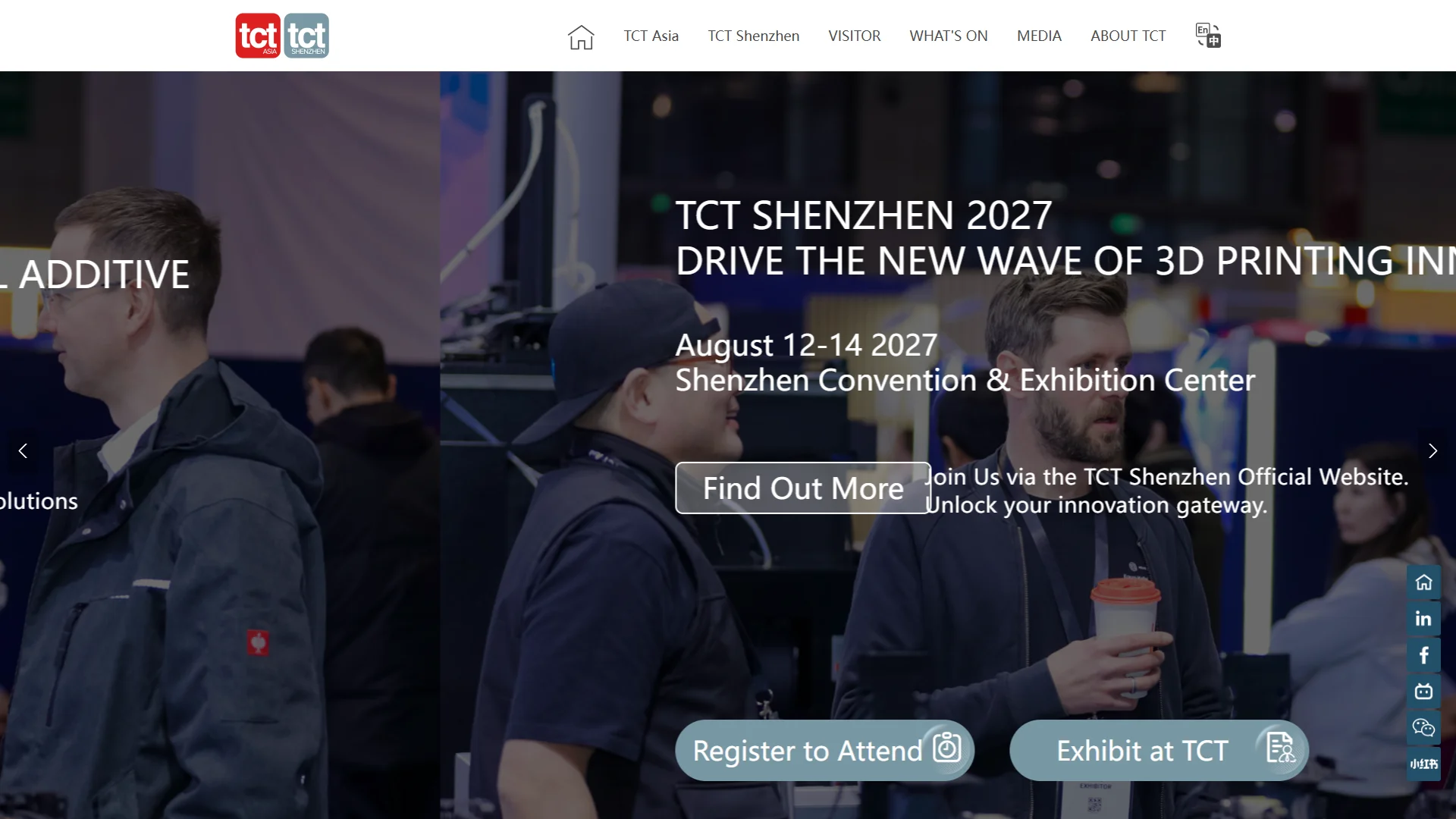
TCT Asia is positioned as an additive manufacturing and 3D printing industry platform. Its relevance to supplier research comes from its role in bringing together technology providers, manufacturers, application specialists, and professional visitors. Unlike a conventional printer manufacturer, the available information supports evaluating TCT Asia primarily as a market-discovery and supplier-comparison channel rather than as a single machine brand.

For procurement teams, an exhibition platform can help compare competing approaches in one setting: metal powder-bed processes, polymer printing, post-processing, scanning, materials, software, and contract manufacturing. It can also provide a route to discussing application requirements directly with exhibitors. However, participation in or visibility through an exhibition should not be treated as proof of a supplier’s machine performance, certification status, delivery capability, or service quality. Those points require separate technical and commercial verification.
The platform is particularly useful when the buyer has not yet selected a process. A team developing aerospace, medical, tooling, automotive, consumer-electronics, or general industrial parts can use supplier meetings to compare build volume, material compatibility, production economics, quality controls, and workflow integration. The value is therefore comparative and informational: it can shorten the early-stage supplier-screening process, while final qualification still depends on samples, documentation, audits, and agreed acceptance criteria.
Pros / Key Features
- Provides a concentrated way to investigate additive manufacturing companies and technologies.
- Supports direct industry networking and application-focused discussions.
- Can help buyers compare equipment, materials, software, services, and post-processing options.
- Useful for monitoring developments in the Chinese and wider Asian additive manufacturing market.
- Exhibition exposure alone does not establish a supplier’s technical or commercial suitability.
Use Cases / Best For
TCT Asia is best suited to procurement teams, engineers, investors, researchers, distributors, and manufacturers conducting market research or building a supplier shortlist. It is less appropriate to describe it as a direct replacement for a qualified printer manufacturer or contract manufacturer. Buyers should use the platform to identify candidates, then request machine specifications, material data, sample parts, quality records, references, warranty terms, and service commitments from each candidate.
2. 3D FastForm
3D FastForm is presented in the supplied research as an additive manufacturing equipment provider with a focus that includes the FF-M140C SLM printer and dental metal additive manufacturing. Its stated application scope includes aerospace, high-performance industrial manufacturing, mold manufacturing, and precision medicine. The available material also refers to core founders from recognized 3D-printing research institutions in China and overseas, although no specific founder names or company location were clearly established in the supplied dossier.
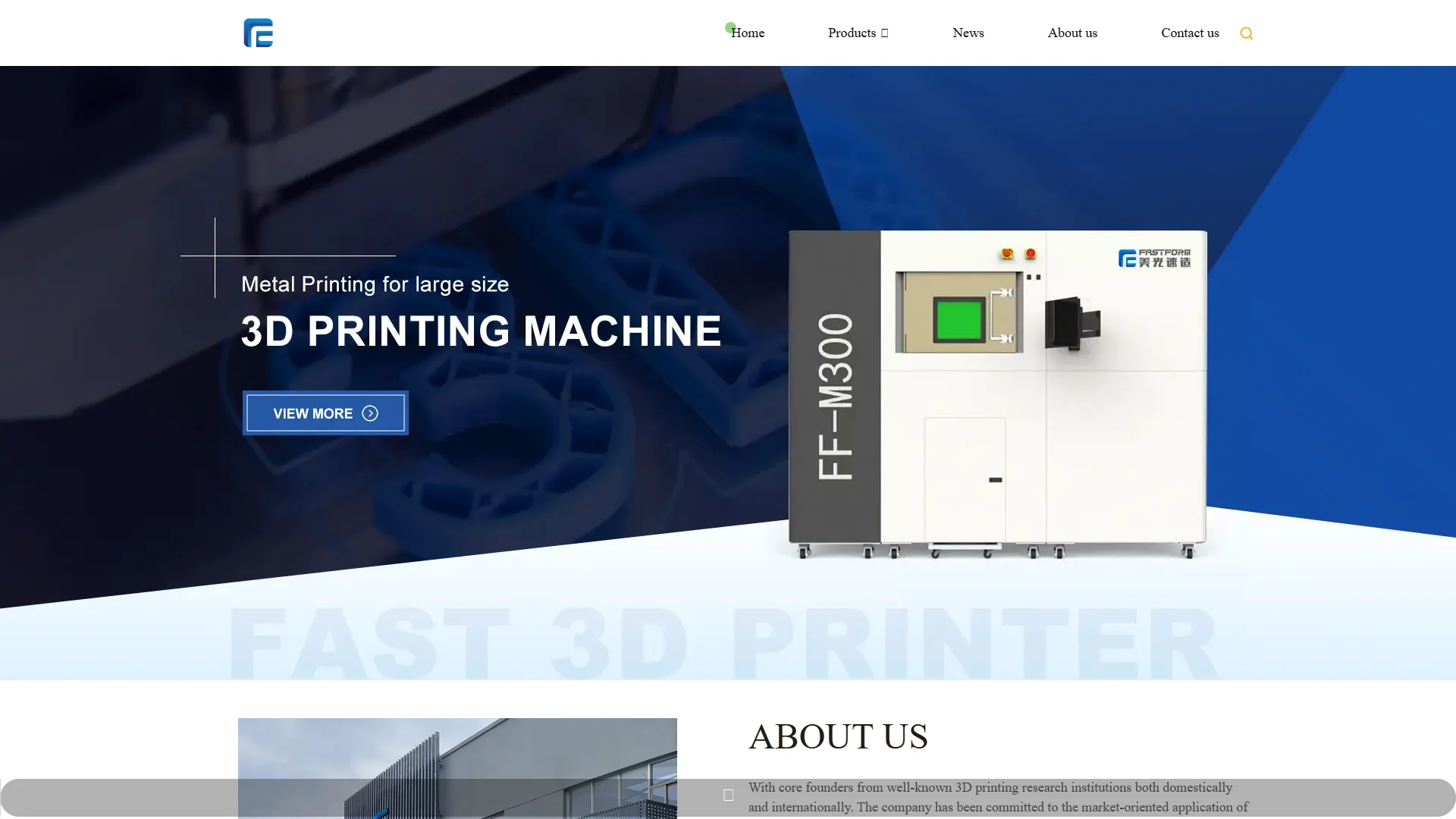
The documented product and application references point toward metal additive manufacturing rather than general-purpose desktop printing. The supplied information mentions dental metal printing, small SLM systems, and the AiForm-G1 liquid-cooling green-laser metal 3D printer. Because the dossier does not provide a complete technical datasheet, buyers should request build volume, laser configuration, supported alloys, layer thickness, atmosphere controls, software, power requirements, productivity data, and validation procedures before comparing the equipment with alternatives.
Pros / Key Features
- Positioning is focused on professional additive manufacturing applications.
- Product references include SLM equipment for dental metal applications.
- Stated application areas include aerospace, industrial manufacturing, molds, and precision medicine.
- The supplied information reports CE certification for the equipment.
- The dossier reports exports to more than 50 countries and regions, including markets in Europe, America, Japan, South Korea, and Southeast Asia.
Use Cases / Best For
3D FastForm is best considered by dental laboratories, medical manufacturers, industrial users, and organizations evaluating metal powder-bed additive manufacturing. Its stated application scope may also interest aerospace and tooling teams. Qualification should include printed test parts, material certification, dimensional and mechanical test data, operator training, preventive-maintenance terms, spare-parts availability, and confirmation that the proposed system meets the buyer’s regulatory and workplace-safety requirements.
3. China 3D Printing
China 3D Printing presents the services of Shenzhen JR Precision Technology Co., Ltd. The supplied company information states that JR was founded in 2012 and provides high-end industrial 3D-printing solutions for fields including molds, medical products, aerospace, robotics, consumer electronics, drones, vehicles, home appliances, mechanical devices, and electric tools.
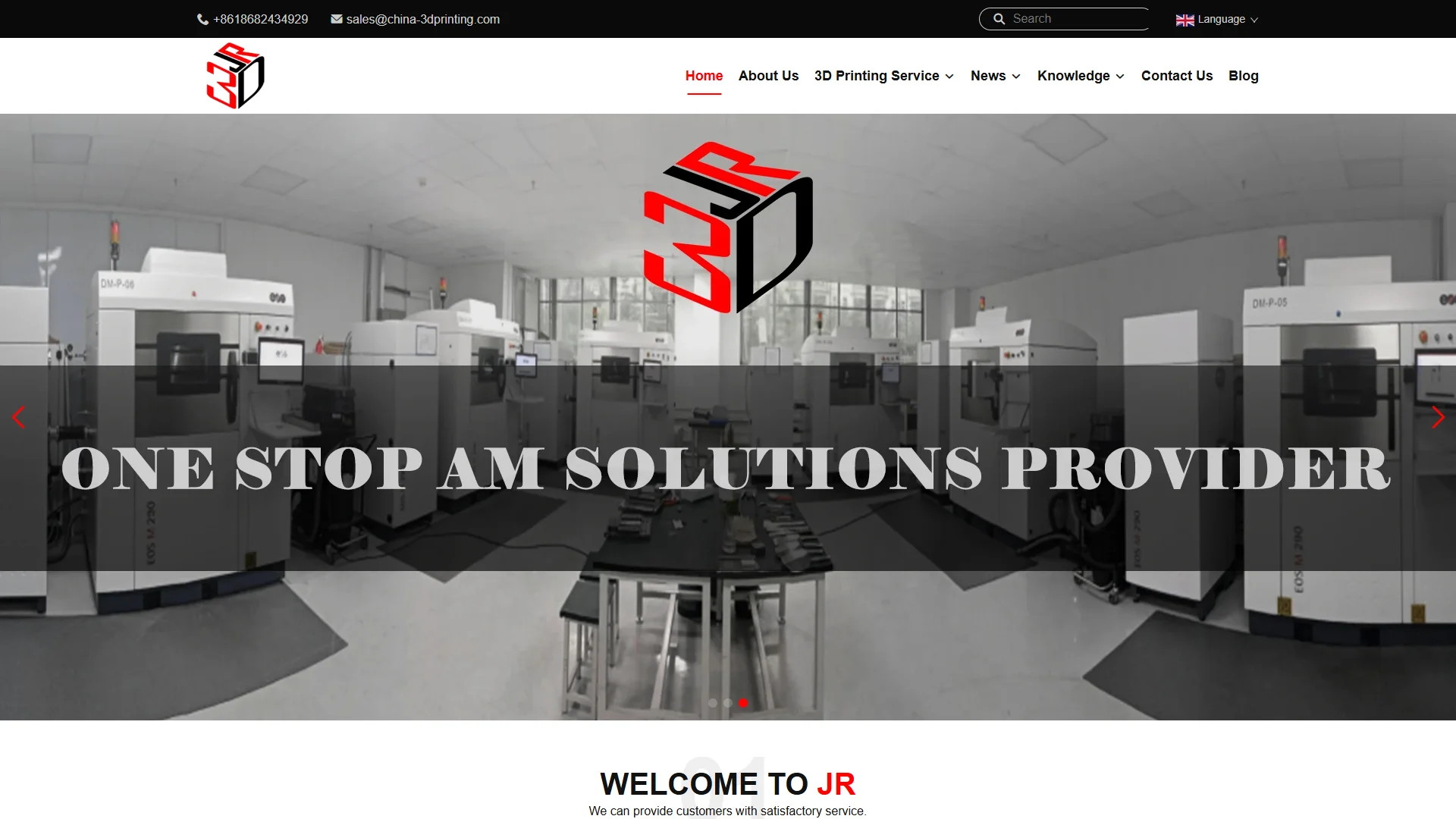
Its listed capabilities cover several production routes. Metal services are described using direct metal laser sintering or selective laser melting, with materials including AlSi10Mg, 316L, Ti6Al4V, IN718, IN625, copper, 1.2709, and CX. Polymer services include selective laser sintering with materials such as PA2200, PA3200, PA11, PA12 plus glass fiber, TPU, and PP. FDM materials listed include ABS, PLA, ASA, PC, nylon, PC-ABS, TPU, and PEEK. The supplied information also references HP Multi Jet Fusion using PA11, PA12, and PA12 GB.
Pros / Key Features
- Offers multiple additive manufacturing processes instead of a single technology.
- Lists both metal alloys and engineering polymers.
- States lead times of five days for a listed metal service and three days for several polymer services.
- Serves a broad range of industrial application categories.
- The supplied information identifies relationships with EOS and Stratasys in Asia; buyers should confirm the current scope of those relationships directly.
Use Cases / Best For
China 3D Printing is suitable for companies seeking outsourced prototypes, functional parts, nylon production components, metal parts, or a multi-process manufacturing partner. It may be useful when a project requires choosing between SLS, MJF, FDM, and metal laser-based production. Buyers should confirm whether quoted lead times include finishing, inspection, shipping, and engineering review, and should request material certificates and quality documentation for safety-critical applications.
4. Additive Manufacturing Users Group
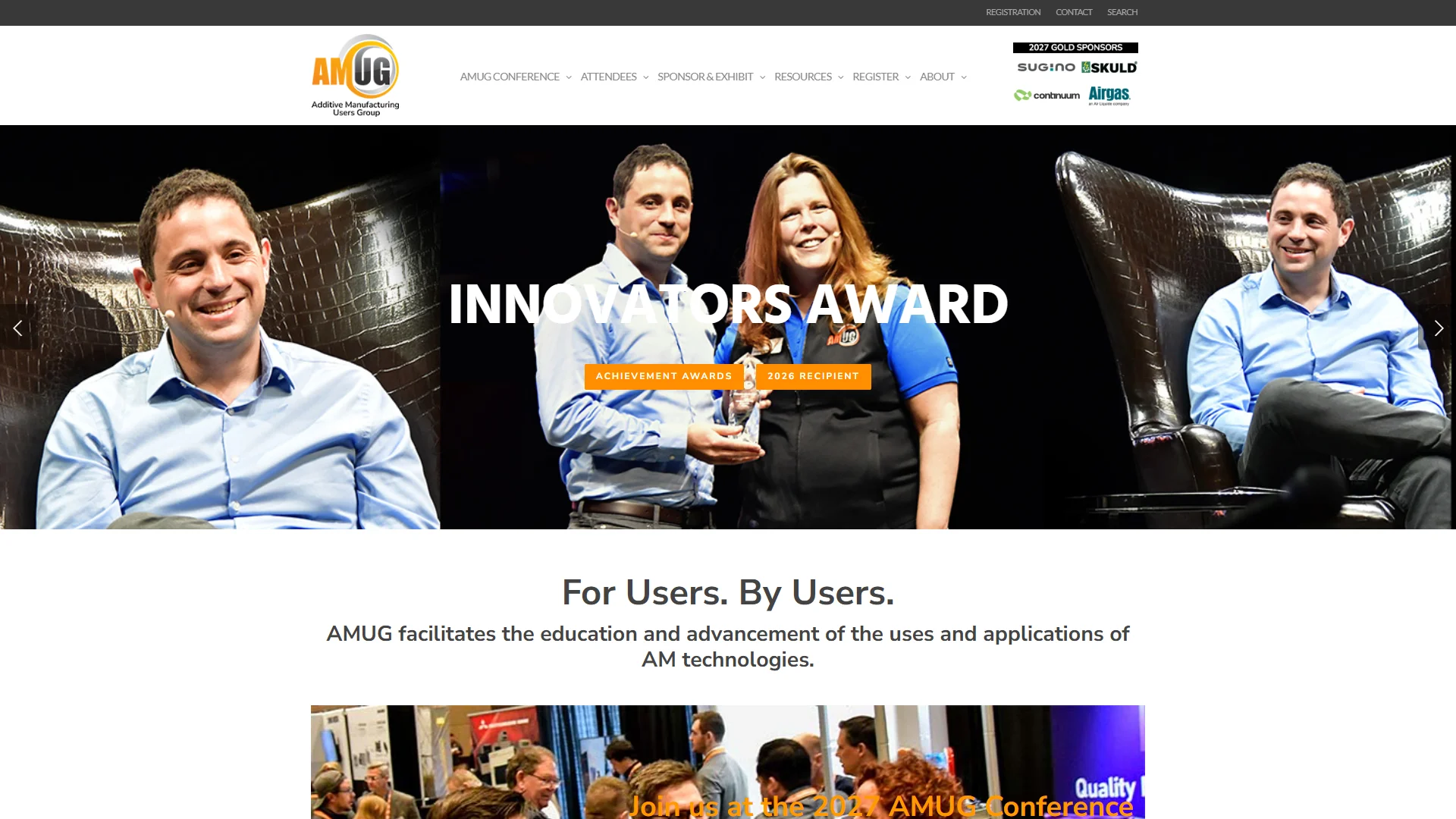
Additive Manufacturing Users Group is an industry user organization rather than a conventional Chinese 3D printer supplier. Its official website promotes the AMUG Conference, technical sessions, hands-on workshops, keynote presentations, and the Innovators Showcase. The supplied research identifies more than 100 technical sessions and interactive learning opportunities as part of the conference offering.
Its value in a supplier-research article is educational and community-based. Users can learn from practitioners, compare implementation experiences, and explore production topics across additive manufacturing workflows. The available dossier does not establish that the organization manufactures printers, sells printing materials, or provides contract manufacturing services. It should therefore be assessed as a knowledge and networking resource, not as an equipment vendor.
Pros / Key Features
- Provides technical education and peer-to-peer industry exchange.
- Promotes hands-on workshops and technical conference sessions.
- Includes an Innovators Showcase for additive manufacturing developments.
- Offers a setting for learning about practical production workflows and user experiences.
- The supplied information also references scholarships for one student and one educator.
Use Cases / Best For
Additive Manufacturing Users Group is best for engineers, operators, managers, researchers, educators, and technology users seeking professional development or community knowledge. It can support supplier evaluation indirectly by helping teams understand process limitations and implementation practices. It is not the appropriate choice for buyers seeking a direct quotation for a Chinese 3D printer or printed production parts.
5. Unionfab
Unionfab is described on its official website as a custom on-demand manufacturing provider combining 3D printing and CNC manufacturing. The supplied research does not clearly establish its founding date, location, detailed machine portfolio, material catalog, target markets, or certification list. Accordingly, the strongest supported conclusion is that its positioning centers on custom manufacturing services rather than a clearly documented in-house printer product line.
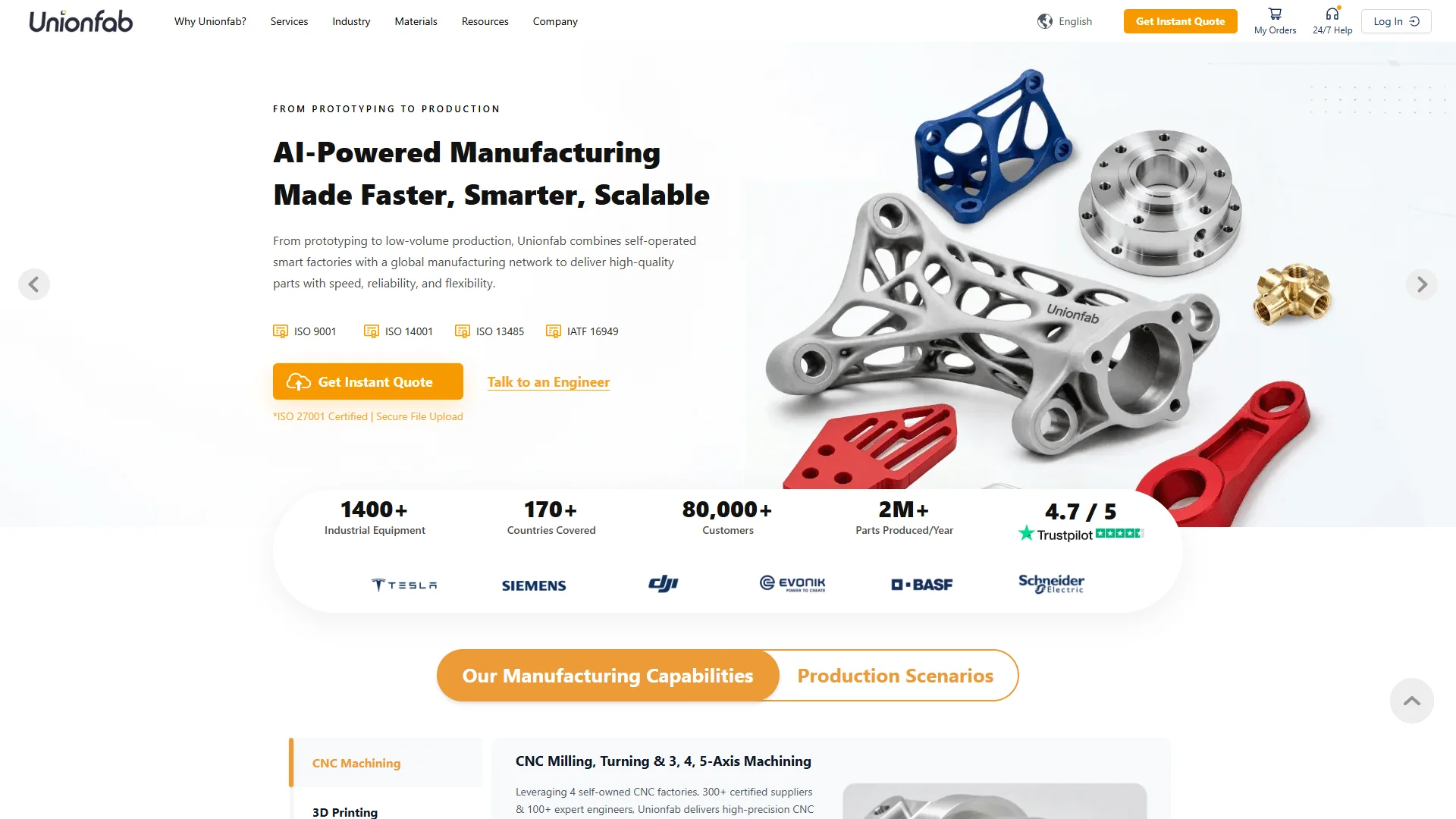
The combination of 3D printing and CNC can be relevant when a project includes different part geometries, materials, tolerances, or finishing requirements. Additive manufacturing may suit complex forms and rapid iteration, while CNC can address applications requiring subtractive machining. The appropriate process depends on geometry, quantity, material, surface requirements, tolerance, and cost. Buyers should obtain a process-specific quotation rather than assuming that every service or material is available for every part.
Pros / Key Features
- Clearly communicates a custom on-demand manufacturing model.
- Combines 3D printing and CNC within its stated service positioning.
- May provide process flexibility for custom components and prototypes.
- Detailed public information about machines, materials, certifications, and delivery is limited in the supplied dossier.
Use Cases / Best For
Unionfab is best considered for buyers seeking custom parts and a manufacturing route that may include both additive and CNC processes. It may be useful for prototype development, replacement components, and low-volume production, subject to project review. Before ordering, customers should confirm the selected process, material, tolerances, inspection method, finishing options, production capacity, shipping terms, and revision policy.
How to Choose Among Chinese 3D Printer Suppliers
- Match the process to the part. Select metal laser processing, SLS, MJF, FDM, resin printing, CNC, or another method according to geometry, strength, accuracy, surface finish, and production volume.
- Check material qualification. Ask for the exact material grade, supplier, technical data sheet, batch documentation, and any applicable mechanical or biocompatibility evidence.
- Separate machine purchases from manufacturing services. A printer supplier, service bureau, exhibition platform, and user organization have different commercial roles and should not be compared on price alone.
- Request representative samples. Test parts should use comparable geometry, material, orientation, and post-processing so that quality comparisons are meaningful.
- Review quality controls. Confirm calibration, inspection equipment, traceability, process monitoring, acceptance standards, and nonconformance procedures.
- Verify compliance and support. For regulated or safety-critical work, check certifications, installation requirements, operator training, warranty coverage, maintenance response, spare parts, and local support.
- Calculate total cost. Include tooling, powder or filament, post-processing, finishing, inspection, packaging, freight, taxes, installation, and future maintenance.
- Clarify delivery terms. Confirm whether quoted lead times begin after drawing approval, payment, material confirmation, or engineering review.
Final Verdict
TCT Asia ranks first for buyers who need to survey the Chinese additive manufacturing ecosystem and compare potential suppliers in a structured industry setting. 3D FastForm is more relevant to organizations evaluating professional metal and dental additive manufacturing equipment. China 3D Printing is suited to outsourced projects requiring several printing technologies and a broad material selection. Additive Manufacturing Users Group is an educational and networking resource rather than a printer supplier. Unionfab is relevant to custom on-demand manufacturing that may combine 3D printing with CNC. The correct choice depends on whether the requirement is supplier discovery, machine procurement, printed parts, professional education, or process-flexible manufacturing.
FAQs
Are all five entries manufacturers of 3D printers?
No. The list includes an industry platform, equipment and additive-manufacturing provider, multi-process printing service, user organization, and on-demand manufacturing provider. Buyers should confirm each organization’s role before requesting a quotation.
Which information should be requested before buying a 3D printer?
Request a full technical datasheet, build volume, process specifications, supported materials, productivity data, software requirements, installation conditions, safety documentation, warranty terms, maintenance plan, spare-parts availability, training details, and reference applications.
How can a buyer compare outsourced 3D-printing services fairly?
Send the same 3D files, material requirements, tolerances, quantity, finish, inspection criteria, and delivery destination to each provider. Compare the complete quotation, sample quality, lead time definition, inspection documentation, shipping terms, revision policy, and total delivered cost.