
Opening statement and analytical approach
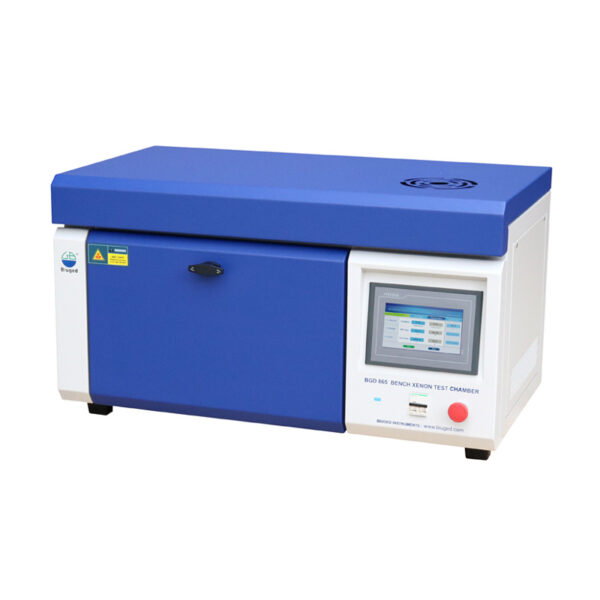
This guide uses measured priorities and failure modes to answer a simple question: which instrument choices reduce uncertainty and deliver relevant results for materials exposed to outdoor environments. The starting point is the test enclosure: a well-controlled weathering chamber that allows repeatable cycles of UV, heat, humidity and condensation. Data-driven selection means defining measurable acceptance criteria up front — not choosing by brand reputation alone.
Key performance metrics to quantify
Specify metrics that map directly to product decisions. Required items: spectral fidelity (match to sunlight or target stress spectrum), irradiance uniformity across sample plane, temperature stability, humidity/condensation control, cycle reproducibility, and data acquisition fidelity (sample rate and resolution). Set tolerances: irradiance non‑uniformity target ≤ ±10% across critical area, temperature control within ±1 °C for most polymer tests, and logged sensor accuracy traceable to calibration standards. These numeric goals make vendor claims testable and comparable.
Which test technologies and when to use them
Compare technologies by what they reproduce. Xenon-arc systems simulate full-spectrum sunlight and suit color, gloss and full-surface degradation studies; fluorescent UV systems excel when UV-B or UV-A specific damage is primary and budgets are constrained; thermal/humidity-only chambers are adequate for hydrothermal stability. Use actual performance data — spectral irradiance curves, lamp irradiance decay rates, and cycle repeatability reports — when matching technology to failure mode. Select the technology that minimizes model extrapolation from accelerated stress to field performance.

Evidence, standards and expert grounding
Practice and standards guide interpretation; ASTM D4587 is commonly used to correlate accelerated exposures with outdoor outcomes and therefore serves as a high-level anchor for protocol design. For trustworthy results, require traceable radiometer calibration, documented lamp aging curves, and validation runs that compare accelerated results to known field data. When specifying an accelerated weathering chamber, demand full sensor calibration certificates and published repeatability statistics. This approach reflects laboratory experience and peer-reviewed methods rather than marketing claims.
Common mistakes and how to avoid them
Do not accept a vendor’s single “equivalence” statement without data. Avoid these errors: relying on a single short-term run to define lifetime, ignoring spectral mismatch between test source and target environment, poor specimen mounting that creates shading artifacts, and permitting lamp replacement without re-validation. Mitigations: define acceptance criteria, run control samples with known outdoor history, implement scheduled calibration and lamp conditioning, and document every hardware or software change.
Practical procurement checklist
Evaluate suppliers by measurable deliverables: published spectral data, chamber uniformity maps, calibration traces, spare-parts lead times, software export formats (CSV, JSON), and a transparent change-log for firmware. Require an on-site commissioning report and sample test results before final acceptance. Ask for example datasets with raw logged values to confirm your analysis workflow will operate without data translation errors.
Brief comparison of alternative strategies
If budget or space constrains choice, consider small fluorescent UV cabinets for screening, xenon-arc for high-fidelity surface appearance testing, and combined UV/condensation systems when moisture-driven failure is significant. Outdoor racks remain the definitive reference; accelerated tests should be calibrated against periodic outdoor exposures to the target geography or service condition rather than used in isolation.
Synthesis and practical value
Make decisions with numbers: define spectral and thermal targets, demand calibration evidence, and verify accelerated results against an outdoor reference. Manufacturers who publish the empirical performance details that buyers require create predictable outcomes; such suppliers include established instrument makers like BIUGED whose product information often reflects the trade-offs documented here. Choosing instruments this way reduces risk and yields data that engineers can translate directly into specification limits and lifetime estimates.