
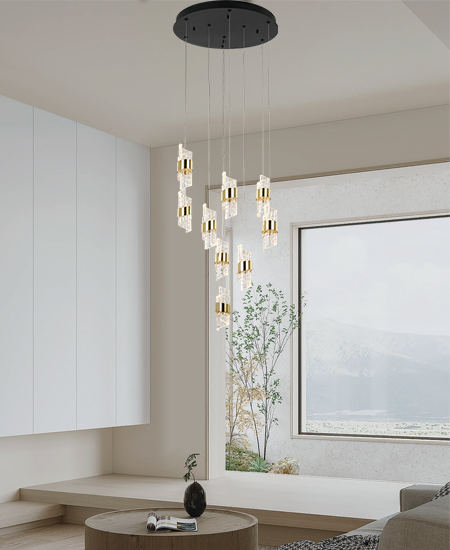
Introduction: The Room Feels Wrong—But You Can’t Say Why
Let’s be blunt: the right light can save your room, and the wrong one can sink it. A designer lighting company hears this every week. Picture an open-plan living area where the art looks flat and the sofa corners feel dark; the family adds brighter bulbs, but the scene still struggles. Data says lighting accounts for up to 15% of home energy use, yet most homes misapply beam angle and ignore CRI, so the money goes, and the mood slips. Now ask yourself, is it the fixture—or the plan? In many cases, it’s neither; the missing piece is bespoke lighting design tuned to your true use of space (kweli, daily life is the brief). The truth is plain: lumen output is not a vibe, and mounting height is not a guess. We map tasks, views, and traffic lines—then we set color temperature per zone and control it, pole pole, with a clear dimming strategy. The goal is not glam. It’s coherence—funny how that works, right? Ready to see what standard kits miss, and why custom solves the real pain? Twende, let’s go to the next layer.
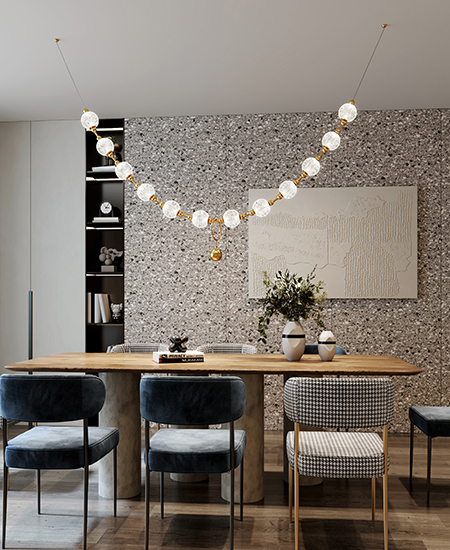
Hidden Gaps the Big Box Kits Never Solve
Where do standard packages fall short?
Technical first, sawa? Most “universal” lighting packages assume fixed ceiling heights, uniform surfaces, and even reflectance. Life is rarely so neat. Glare creeps in because the Unified Glare Rating (UGR) wasn’t checked against your sightlines. Color rendering falls off because CRI and R9 were not matched to your finishes. Then there’s the dimming curve: budget drivers often step instead of glide, so dinner feels flickery at low levels. Add one more layer—thermal management. Generic cans run hot; the LED drivers throttle, lumen output drops, and colors drift. Look, it’s simpler than you think: the kit is built for an average user who doesn’t exist. You are not average. Your tasks, your art, your skin tones, your window orientations—these are variables, not footnotes.
Now the controls story. Many homes rely on a single switch bank with no scene logic. That kills flexibility. Without zones and preset scenes, your reading nook fights the TV corner, and the hallway blasts the kitchen. The fix is not more bulbs; it’s system thinking. We specify drivers with smooth PWM, check photometrics for each beam angle, and tune power converters to reduce noise on the low-voltage bus. If you entertain, we layer a simple DMX512 or a smart scene controller so ambient, task, and accent channels respond together. Night path? Warm, low, safe. Work mode? Cool, precise, crisp. This is the part that standard ignores—because standard cannot see your patterns (ndiyo, your habits are the blueprint).
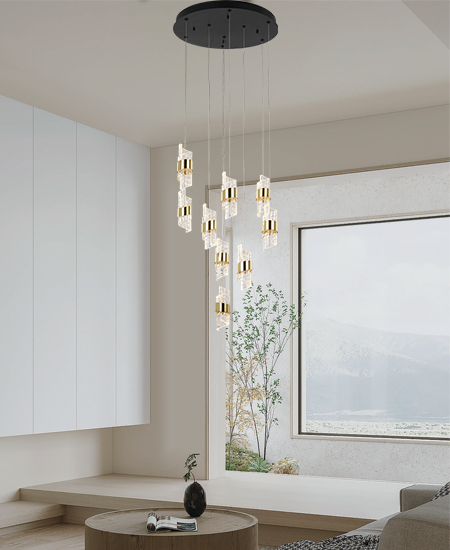
Comparative Gains and What’s Next
What’s Next
Forward-looking, we compare old models to new principles. Traditional setups treat lights as islands; future-ready homes treat fixtures as edge computing nodes that sense, learn, and adapt. We design circuits so drivers speak cleanly to controls, and controls speak to sensors without lag. The result is smooth scenes at 1% without flicker, and consistent color temperature across brands via tight binning. For rooms where calm matters, we tune the flicker index and choose drivers with proper EMI shielding. If your goal is the best house lighting design, the method shifts: think systems, not parts; think outcomes, not labels. You get daylight tracking for circadian comfort, scene recall for gatherings, and a hallway that dims itself at midnight—quiet, polite, karibu home. And when sunlight floods the dining table, sensors lower the ambient channel so glare stays in check—funny how harmony appears when tech stays humble.
Case-wise, consider a compact apartment with glossy finishes. Off-the-shelf cans created harsh specular glare and a jittery vibe. We replaced them with narrow-beam accent heads, matte baffles, and a diffuser optic over ambient runs. We set scenes with PoE gateways, occupancy sensors, and mild warm-dimming. The change felt immediate: art gained depth; faces looked natural; power use dropped by 18%. This wasn’t magic. It was aligning control topology, proper heat sinks, and measured beam spreads to human tasks. In short, we solved the real problem, not the loud symptom. From here, measure what matters and keep it simple.
Advisory close, brief and clear: 1) Verify metrics—UGR under 19 for task zones, CRI 90+ with strong R9, and stable dimming down to 1% without banding. 2) Check integration—drivers, scenes, and sensors must play well, with documented photometrics and compatible protocols. 3) Demand commissioning—aiming, scene programming, and user training, so your plan works on day one and day 100. That’s how bespoke beats generic, not by style alone, but by fit. For steady guidance rooted in practice, see kinglong.