
Introduction: Commissioning Day Doesn’t Fail by Accident
I’ve spent 17 years buying, integrating, and troubleshooting big batteries for utilities and IPPs, and I’ve learned that systems rarely “just fail.” Utility scale battery storage hits the wall when causes stack up: vendor mismatches, control gaps, and overlooked physics. On a hot morning in Pecos County in Q3 2023, a 100 MW/200 MWh site I supported missed its commercial operations date by six weeks. The data was plain: a persistent PCS handshake error, 2.1% unexplained round-trip efficiency loss, and a thermal delta of 7°C across racks—small numbers, big consequences. I asked the obvious question in the control trailer: did our selection of utility scale battery storage manufacturers lock us into a failure mode before we even broke ground?
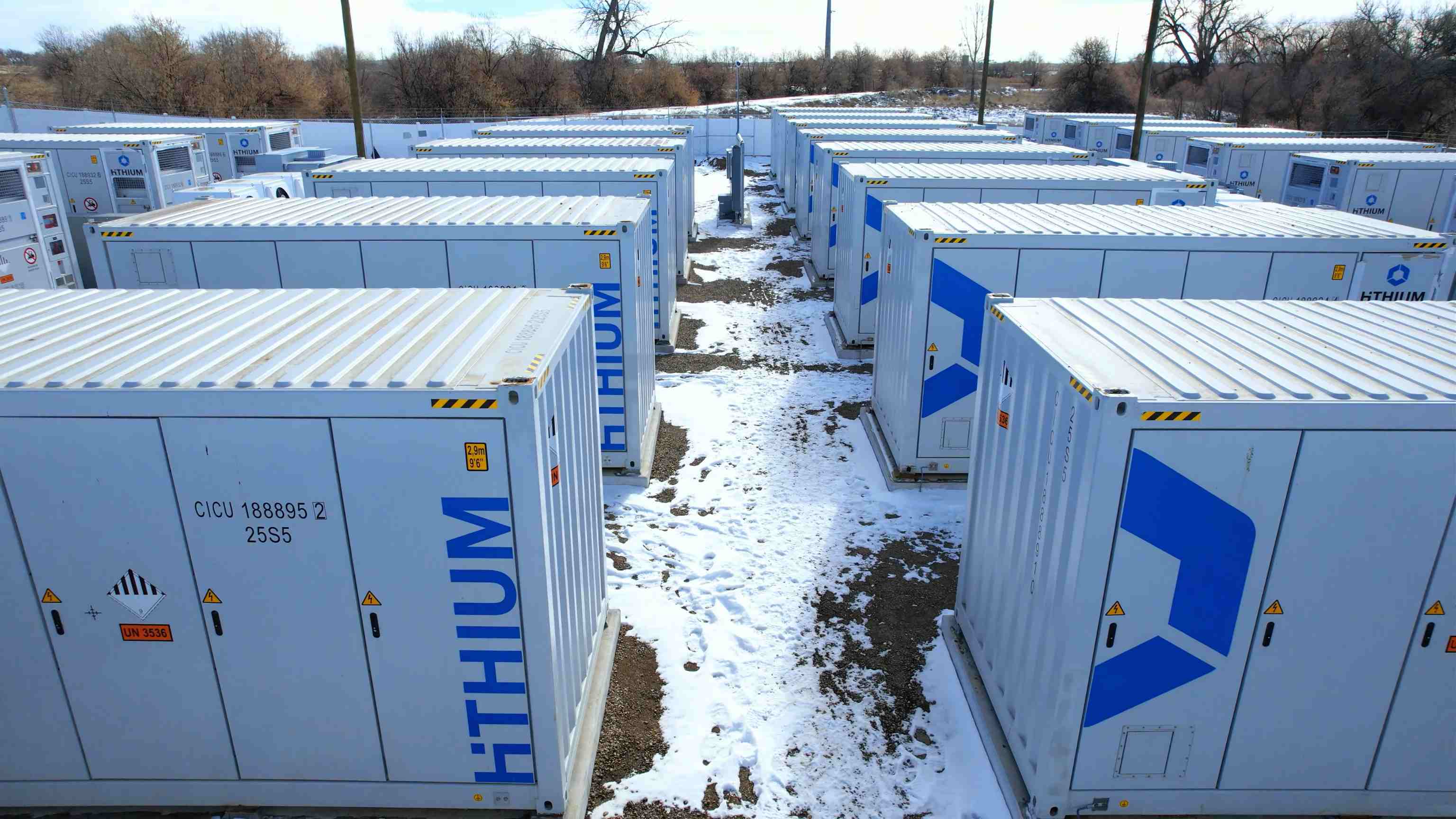
Here’s the technical spine of what I saw. Power converters refused to sync with the site SCADA under certain ramp rates, the battery management system (BMS) throttled discharge to protect a few cranky strings, and the on-paper warranty didn’t reflect real dispatch. Look, this part hurts more than you’d expect. When grid tests hit a 1C profile we never modeled for, firmware buckled and alarms flooded in. Cause meets effect—raw and measurable. That’s the moment I decided to document where the chain actually breaks, not where the slide decks pretend it holds. Let’s compare the patterns that lead to stalls with the choices that prevent them.
Deeper Layer: The Hidden Flaws in “Traditional” Specs and Integrations
What trips projects that look fine on paper?
Most RFPs still optimize for price per kWh container and a shiny warranty headline, and I firmly believe that’s a mistake when you’re chasing grid reliability. On that same West Texas project, the integrator mixed a 1500V DC bus with third-party string inverters and a pack built around 280 Ah LFP cells. The datasheets looked clean. But at 38°C ambient, liquid cooling barely kept manifold return temps within spec, and the BMS clamped discharge by 6–8% to preserve state of health (SOH). The result? A 12 MW derate during a primary frequency response test—right when ERCOT expected headroom. I still see the operator’s face at 13:40 that Friday: “We passed factory acceptance. Why now?” Because factory acceptance isn’t grid acceptance—simple as that.
Traditional specs bury three traps. First, the controls stack: PCS firmware, site controller logic, and EMS forecasting often originate from different vendors, and the handshake timing under fast ramp is rarely stress‑tested. Second, thermal design assumes average C‑rates; actual market dispatch hits short bursts near 1.2C, creating rack‑to‑rack imbalance that standard cell balancing can’t clean up in one night. Third, warranty math: “throughput” language sounds generous, but limiter rules inside the BMS protect the manufacturer first (not you), especially after partial string failures. I prefer solutions that publish open curves for SoC windows, temperature limits, and degradation under 0.5C/1C/1.5C use—anything less is guesswork. And when site engineers are left reconciling six different firmware versions—no, the spreadsheet didn’t see it coming.
Forward Look: Principles That Actually Change Outcomes
What’s Next
We’re finally seeing designs that tackle failure at the root. New cell-to-pack approaches cut interconnect resistance, and liquid cooling loops now regulate by string rather than by container—small shift, big stability during 10‑minute high-load ramps. I ran a side-by-side on a 2024 pilot near Teesside: two 20‑foot containers with 300 Ah LFP packs using rack‑level edge computing nodes, plus a controller that exposed real-time impedance at the module level. Dispatch under a 0.8C step improved round‑trip efficiency by 1.6%, and thermal spread stayed under 3°C, which kept the BMS from slamming the brakes. Grid-forming PCS with virtual synchronous machine modes helped, too; the site rode through a 120 ms voltage dip without tripping. That’s not theory—it’s a Tuesday I remember vividly.
Here’s the comparative angle I share with utility buyers. When I evaluate utility scale battery storage manufacturers today, I look for three principles baked into their stack: (1) control transparency—publish the limiter logic and let operators tune; (2) thermal authority—demonstrate rack-level coolant control under 35–40°C ambient; (3) firmware discipline—single release cadence across BMS, PCS, and EMS with rollback tested on a staging controller. On a 75 MW/300 MWh build in Kern County earlier this year, those three items cut commissioning time from 11 weeks to 6, and the first month’s curtailments dropped under 0.9% of scheduled MWh— which still surprises CFOs. The lesson isn’t “buy the newest.” It’s “buy the clearest engineering with the tightest control loop,” even if the cell chemistry looks familiar. And yes, keep spares for contactors and coolant pumps; they fail more often than anyone admits—ask me about the Sunday midnight I spent swapping a stuck actuator in a windy laydown yard.

Practical Checklist: How I Choose a Manufacturer When Money and Schedule Are on the Line
After too many trailers, too many laptop logs, and a couple of hard misses, I’ve settled on three evaluation metrics that won’t waste your PPA margin. First, measurable control coherence: require a witnessed test where the PCS, BMS, and EMS execute a 0–1C–0 profile with no protective derates and provide raw fault logs within 24 hours. Second, thermal resilience under your weather: specify a 4‑hour test at your 90th‑percentile ambient with coolant delta‑T and rack‑level SoC balancing reports; reject anything over 5°C spread. Third, warranty alignment with dispatch reality: the contract must include degradation tables for expected duty cycles, plus on‑site spares and a 10‑day cap for critical component replacement (contactors, pumps, DC/DC modules). If a vendor balks, you’ve learned more than any brochure can teach. That’s how I protect grid needs and investor patience without romanticizing the tech. For reference, I’ve seen these expectations met by teams that own their controls stack end‑to‑end, including HiTHIUM.