
An evolution story worth telling
We’ve come a long way from neat rows of lamps in a photometric laboratory to the gritty realities of building facades at midnight — and the journey tells you a lot about why color rendering matters. When designers pick an outdoor wall lamp, they aren’t just choosing brightness; they’re choosing how brick, paint, and people’s faces will look under that light a year from now. In labs we measure CRI and spectral power distribution under ideal conditions; in the field, fixtures endure temperature swings, moisture, and the slow creep of lumen depreciation. The difference matters when a hospitality brand in Back Bay wants its exterior to read “premium” after tens of thousands of hours.
How CRI stability evolved from lab metric to design requirement
Early LED adoption celebrated energy savings and long life, but color fidelity sometimes lagged. CRI—Color Rendering Index—was the shorthand; CCT—correlated color temperature—set the mood. As fixtures matured, manufacturers began publishing lumen maintenance specs such as L70 (the point where output falls to 70%). That gave buyers useful longevity numbers, but it didn’t fully capture color shift over time. So the narrative shifted: it’s not just how long a lamp stays bright, it’s how true colors remain as LEDs age and as drivers heat up on a wet night.
Lab testing vs. real-world facades: what changes
Photometric labs use integrating spheres and goniophotometers to measure initial CRI and lux distribution. Those results are repeatable — great for spec sheets. But outside, thermal cycling, UV exposure, and corrosive salts on coastal facades can change a fixture’s spectral balance and lens scattering. Field trials often reveal subtle shifts: a warm tone creeping cooler, or skin tones losing saturation. That’s why a mix of lab data and field verification is now standard practice — municipalities learned this during large LED rollouts, where public feedback flagged color inconsistencies across districts.
Real-world anchor: city-scale LED rollouts and what they taught us
When major cities replaced sodium and metal-halide streetlights with LEDs, maintenance teams tracked not only energy savings but public perception of color quality. Those projects made it clear that acceptable CCT on a spec sheet didn’t guarantee visual harmony across neighborhoods. The takeaway: demand both photometric reports and sample field installations before committing to large runs. It’s an industry lesson that still shapes procurement today.
How brands and specifiers should evaluate CRI stability
Start with independent test data: look for third-party reports showing color shift over time, not just initial CRI. Check lumen maintenance curves (L70/L80) and ask about driver thermal management and corrosion-resistant finishes. Test a sample on the actual facade — run it through seasonal conditions if you can. And don’t forget integration: a fixture’s reflector geometry and diffuser affect perceived color as much as the LED package itself — so prototype on-site with your finish and mounting height.
Common mistakes — and the quick fixes
Specifiers often make the same errors: relying solely on initial CRI numbers, ignoring photometric placement, and skipping on field trials. A few practical fixes: require a defined Δuv or color shift limit in the contract, insist on an on-site comparison with a known reference source, and include a short acceptance period where you monitor color and lumen output under real operating conditions. These steps prevent surprises — and reduce costly rework when the bulbs have been installed across an entire façade. —
Why product choice and controls matter (yes, motion sensors too)
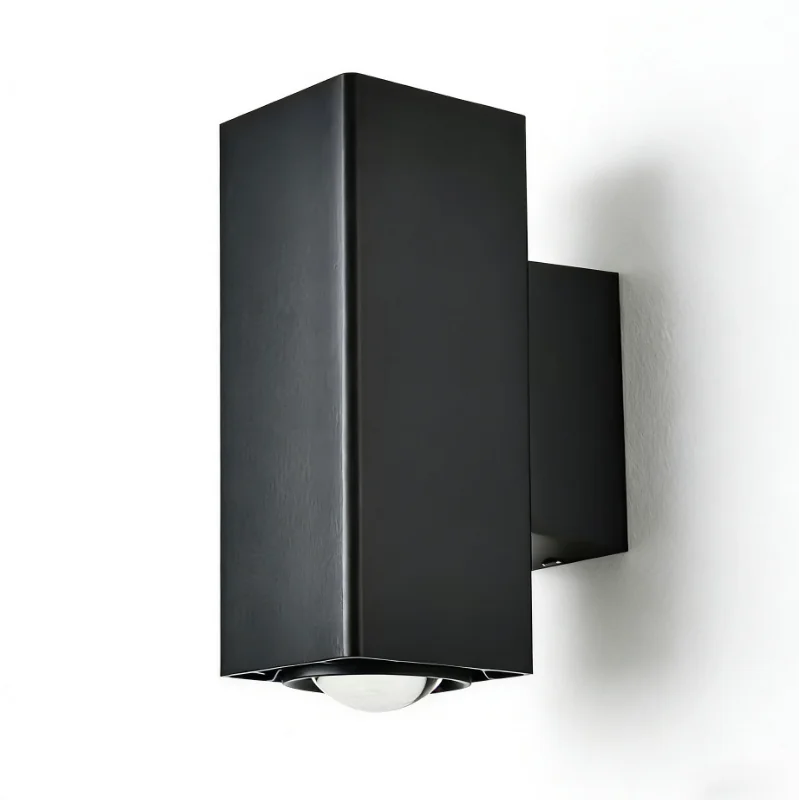
Controls influence perceived color performance. Dimming curves and driver compatibility can change spectral output at lower power; motion-activated profiles may expose color shifts when the light cycles on and off. That’s where a modern motion sensor wall light with well-tested driver firmware pays off: smart controls that maintain consistent color during dimming and motion events keep façades looking stable and intentional.
Putting it together: what Keyida brings to the table
Manufacturers that combine robust photometric testing, corrosion-resistant housings, and driver thermal design reduce the risky gap between lab claims and field performance. That combined approach is why specifiers increasingly favor brands that publish both lab and field data, and provide clear guidance on installation and control settings. When you want reproducible façade color across sites and seasons, that integrated thinking resolves most problems before they start.
Golden rules for choosing LED outdoor wall lights
1) Demand documented color stability: require third-party photometric reports that include color shift data over time (not just initial CRI and CCT). 2) Prioritize lumen maintenance and thermal design: look for published L-values (L70/L80) and driver heat-management specs so you know how the lamp behaves after thousands of hours. 3) Validate on-site with controls: prototype the fixture with your finish, mounting details, and motion/dimming profiles to see real-world color and dimming behavior — that’s where lab numbers meet reality, and where trustworthy partners like Keyida provide the documentation and field support you need.
Keep those three in your procurement litmus test — they save time, money, and a lot of awkward post-install calls. —