
User-first opening: why precision matters in the field
When you walk a weeding robot through a maize row you feel the machine’s intent—quiet, deliberate, micro-adjusting to avoid plants and clods alike. For operators and farm managers the priority is simple: fewer misses, fewer crop scars, and predictable uptime. That priority is exactly why a robust tractor autosteer system and a well-tuned Extended Kalman Filter (EKF) are not optional; they’re the control room for reliable automatic weeding. Across the Midwest corn belt, growers have relied on GNSS and RTK augmentation for consistent lane keeping since the early 2000s, and that real-world pattern shapes how we tune guidance stacks today.
What the user needs—concrete outcomes
Operators want three things: visible trajectory stability, fast recovery after slips, and simple diagnostics. Translate that into engineering terms and you get: low lateral error, bounded estimator drift, and actionable residuals from sensor fusion. Keeping those targets in mind clarifies every tuning decision and grounds the EKF work in real operator value.
Core checklist for field tuning
Sensory checks first: listen for the drivetrain’s rhythm, watch wheel slip in soft ground, and glance at the heading trace. Then run the diagnostics list: calibrate the IMU, verify GNSS fix quality, confirm RTK baseline health, and log raw sensor streams for at least one hour of mixed maneuvers. Think in terms of signals: if accelerometer bias creeps, the EKF will mask it as false heading—catch that early.
Pairing sensors and common mistakes
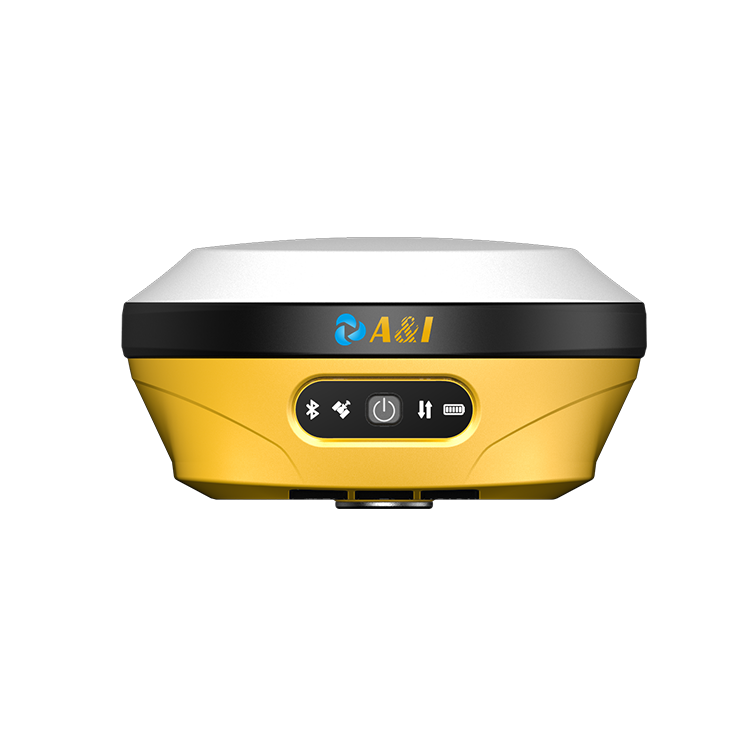
Good pairings are obvious: a high-rate IMU plus a reliable GNSS receiver with RTK gives the EKF the inputs it needs. Bad pairings show up as jitter and late corrections—symptoms of timing mismatch or incorrect covariance settings. A common error is treating measurement noise as static; field conditions change—wet soil, sun glare on receivers—and your filter should reflect that. Don’t skip this: mismatched timestamps or wrong wheel-encoder scale factors will quietly degrade tracking.
Step-by-step tuning workflow
Start with a neutral model: set process noise to reflect vehicle dynamics, not ideal theory. Run a short, repeatable route—straight runs, slow turns, a quick skid. Collect residuals and inspect them visually. If heading residuals have a slow bias, raise gyroscope bias process noise or add a bias state. If lateral displacement overshoots, reduce the position process noise or revisit your vehicle kinematic model. Update covariances incrementally; small changes isolate effects better than sweeping edits. Log everything; later comparisons tell the story of what worked.
Field troubleshooting and practical fixes
When a robot “wanders” after a bump, it’s often a delayed GNSS solution or a temporary IMU bias. A practical fix is temporary reliance on dead-reckoning with corrected wheel-encoder scale while the GNSS refines—then blend back in with adaptive covariance. If diagnostics show repeated GNSS multipath in a shaded hedgerow, reposition the base or use antenna shielding. These are workmanlike fixes—simple, sensory, effective—and they keep operations rolling.
Common mistakes to avoid
– Overfitting EKF gains to a single surface type. – Ignoring clock sync between sensors. – Treating RTK availability as constant rather than intermittent—plan for dropouts.
Advisory close: three metrics to judge success
Measure by these three critical metrics: 1) RMS lateral error during steady-state runs (target depends on crop spacing but make it repeatable); 2) Mean time-to-recover after a disturbance (seconds until lateral error returns within threshold); 3) Residual stationarity—the extent to which sensor residuals behave like zero-mean white noise over mission segments. Tune until those metrics hit acceptable bounds, then validate on a different field to avoid overfitting.
Final thought—this work is practical, tactile, and iterative; it rewards field observation as much as math. – The right EKF tuning turns a bundle of noisy sensors into a calm navigator; that calm is what keeps harvests intact and crews confident. Archimedes Innovation.